[This is part two in an article series on “statism and salvation.” See part one, three, four]
Leaving Egypt Ministries, Obadiah D. Morris
Once we see that the Bible most often portrays salvation as God protecting and rescuing His people from our enemies (ie., the state rulers of the world), it becomes clear why relying on the State for protection—as those who advocate for the supposed necessity of human government do—necessarily means that one is abandoning God’s protection in favor of faith in human institutions. Indeed, it means to abandon God’s salvation, which, contrary to the popular view of “being saved” as nothing more than an escapist ticket to heaven after we die, is very much so an offer of real-world protection against the tyrants of the world who rule over those who have turned away from God.
Furthermore, we can see why the State, as an ungodly institution that is set up in opposition to the Kingdom of God, offers “protection” and “security” to those who trust in men to rule over them: the State is a false god and is in direct competition with God to bring men under its jurisdiction and its deception. States exist to trick men into forsaking God as their King and sinfully trusting in human kings as their “saviors.” Statism is satanic deception that deceives men into believing that human rulers are “necessary” for their protection and salvation. This deception has tricked many so-called Christians into being nothing more than apologists for the kingdoms of the world, all while being blinded to their enmity with the Kingdom of God which they effectively preach against by spinning the gospel of human government.
The early Christians however knew that the lords and kings of the world were in competition with the Lord and King of the universe, Jesus the Christ. They knew that the promises of protection, law, justice, prosperity, security, etc., that came from the State was another gospel — another means by which men believe they are saved. As Charles Norris Cochrane wrote in his book, Christianity and Classical Culture, the early Christians were fully aware of how the State competes for lordship with a different gospel than the Gospel of Jesus Christ when they claimed that Jesus, rather than Caesar, was their Lord.
“Salvation is to be found in none other save Augustus, and there is no other name given to men in which they can be saved. This is the climax of the advent proclamation of the Roman Empire…The history of Greco/Roman Christianity resolves itself largely into a criticism of that undertaking and of the ideas upon which it rested. Namely, that it was possible to attain a goal of permanent security, peace, and freedom through political action, especially through submission to the virtue and fortune of a political leader. This notion the Christians denounced with uniform vigor and consistency. To them, the state so far from being the supreme instrument of human emancipation and perfectibility was a straight-jacket to be justified at best as a remedy for sin. To think of it otherwise, they considered the grossest of superstitions.”
Biblical salvation
To treat God as nothing more than a heavenly soul-saver is to dismiss the many references to real-world salvation from enemies (ie., from statists) in the scripture. (There are probably hundreds of references that could be found if we tallied up both the explicit rescues of the many historical narratives of this nature and the many references to God as our refuge in a more poetic/prophetic context. We have tons of stories of physical deliverance alone, and even more verses of that nature). This conception of salvation as being limited to nothing more than the eternal security of our souls probably contributes to this idea that the Lord is not really the King of earth, which causes men to either (1) forsake any obligation to seek the Kingdom of God, which effectively allows the systems of man to advance through their sloth, or (2) positively endorse the kingdoms of this world as sit-ins for the apparent absence of the Lord in earthly affairs, which more directly sees to it that the worldly kingdoms of men are empowered and active. Respectively, these ideas of salvation on earth are that it either (1) doesn’t happen, or that (2) men are needed for it. They both exclude God from saving people on earth today from our enemies, ie., from the evil statists who plunder humanity.
To think of the Lord as doing nothing more than saving His people into heaven ignores the many Biblical references to being saved and delivered in the here and now, as well as downplaying the world-changing event that was Christ’s advent on earth (Matt 28:18; Col 2:15). It waters down the Gospel of the Kingdom of God, where our Lord Jesus Christ brings men into His juridical kingdom and out from the dominion and oppression of the human kingdoms of this world, into not much more than a spiritualized message that all men are now invited into an otherworldly heaven. It treats the Lord as nothing more than some inactive quasi-king who passively sits in heaven to accept souls upon their death, rather than a living God—the King of kings and Lord of lords—who offers real-world protection from our enemies for those who seek it in Him alone.
It is curious that this heavenly-mindedness should dominate most discourse on salvation when the Biblical references to the afterlife and being saved into heaven are relatively small compared to the real-world cases of God removing His people from physical bondage under state rulers, as we are in today for our sin of selling ourselves out to these men. The salvation that God offers for those who trust in Him and seek His Kingdom is very often about being literally and physically saved from enslaving statist systems and rulers:
“That day the LORD saved Israel from the hand of the Egyptians, and Israel saw the Egyptians dead on the shore” (Exodus 14:30).
Statism as betraying God’s salvation
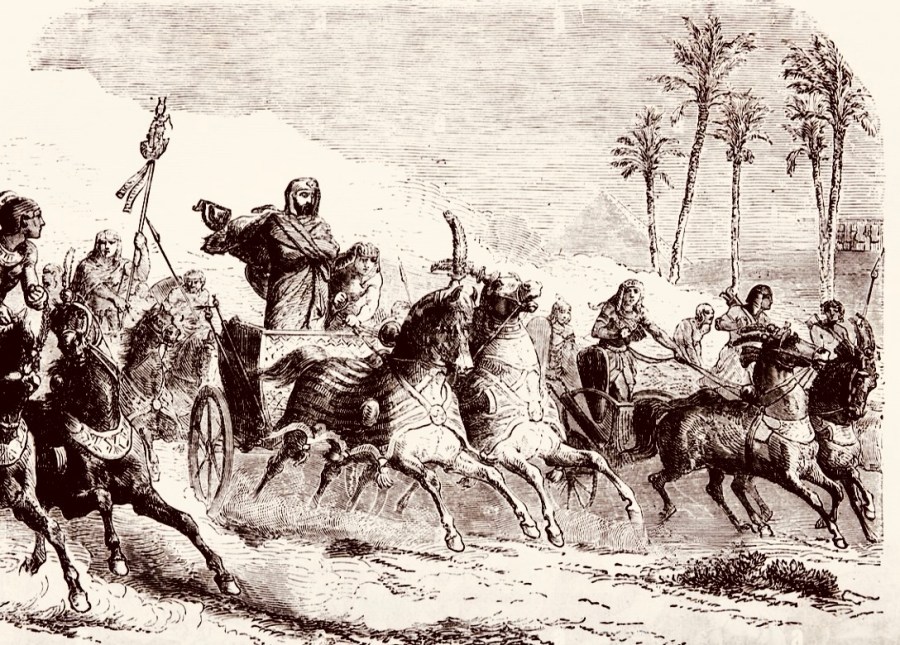
Once we see that God’s salvation has very much to do with protecting us from our earthly enemies, ie., the demonic statists who prey on us, it’s easy to see why trusting in man’s political systems is to directly betray God. Since God promises genuine and real salvation on this earth for those who seek Him and turn away from the kingdoms of the world that have them living as tax slaves, trusting in these man-made kingdoms for “protection” is necessarily to trust in them for salvation, and therefore to forsake the salvation of the Lord and seek it from the very people we need to be saved from. It is to make Pharaohs and Egypts into one’s “lords” and “saviors” and deny that God could keep the Assyrians away if we trusted in Him alone.
That trusting in the protection of States is to forsake the salvation of the Lord becomes more evident when God himself shows that seeking human kings is not an abandonment of God because men believed that they need human kings to save their souls, but precisely that this sinful quest for men to rule over them is done under the belief that they they need men to protect them from their enemies under the assumption that God can’t do it for them — that God is not a genuine savior in the sense that they believe human kings are. That is, God doesn’t complain that these men are going off and looking for a human king who they believe will secure their eternal souls, and this isn’t what they were doing. What God had considered to be turning away from Him was precisely that they sought human kings to protect them from real-world enemies. What they were giving up was the belief that God can fight off enemies and buying into the idea that human rulers were needed to accomplish this task. It was this statism that God saw as an abandonment of His kingship and salvation. For the Lord God is not just a soul-saver who wants men to regard Him as nothing more; He wants to be our King in the sense that we rely on Him for protection from enemies, and He sees all quests for earthly king-protectors as turning away from Him (1 Sam 8:7-8) to trust in the salvation of men. The sin of the Israelites was not that they believed human kings were going to get them to heaven, but that they expected human kings, rather than God, to fight their enemies for them (1 Sam 8:20). This demonstrates how directly rebellious statism is to faith in the Lord’s salvation, as statism and its offer of protection from enemies is directly contrary to the very type of saving that God says He wants to do for His people.
This episode of human-king-seeking in the Book of Samuel shows us that God’s grievance was not just some people believe that men, rather than God, were going to save them into heaven — they didn’t. It was precisely that they believed they needed men to act as their military-protectors that God saw them as betraying His Kingship (refuting the idea that God is our heavenly soul-saver who leaves us in need to seek human-kings for our temporal earthly salvation). This question of who one relies on for their earthly protection is thus not insignificant to God, but bound-up in the question of who one regards as their savior: God or men. To seek out protection from our enemies from state rulers is thus no light matter: it is exactly what men do when they rebel against the Lord and His Kingship. In other words, seeking human rulers is precisely definitive of sin, as the Israelites recognized themselves. “They pleaded with Samuel, ‘Pray to the LORD your God for your servants so that we will not die! For we have added to all our sins the evil of asking for a king’” (1 Samuel 12:19). Seeking human rulers (ie., false gods) to stand over us is an express violation of the first of the Ten Commandments to have no other gods before God.
Those who think their politics—in this case their faith in man-made governments to keep them safe—is irrelevant to their faith are mistaken. Those who think they may hold any political position they like do not see that God wants to be our real-world protector as much as anything else. There is no such thing as “God as our soul savior” and “States as our savior from earthly enemies.” God wants to be our real-world protector, too. There is no legitimacy to the idea that we must adopt the worldly politics of statism for our earthly salvation. There is no legitimacy to the idea that we can proclaim Christ as our King while still being in need of human kings, like those thousands of fools who, under this arbitrary separation of earthly and heavenly, believe they can hold up the banner of “Christ is King” alongside their worldly ideologies and turn such powerful rallying cries into cheap and meaningless cliches. The Lord is truly our King, and a true king, who actually saves His people from their enemies, unlike the kings of this world who are the enemies.
Given that God wants to be a protector from real world enemies, that He wants us to trust in Him to keep the Assyrians away rather than the Egyptians, we see that to seek protection from men—to place one’s hope for protection and liberty in institutions like the “U.S. military”—is to trust in the false salvation of men rather than that of the Lord. The salvation of the Lord is not purely heavenly, and so anyone who trusts in worldly rulers to protect them is turning away from the salvation of God. Our God, as one who wants to truly be a people’s King and Savior, is not indifferent on matters of protection, as if He is not an all-encompassing Lord but is limited to the heavenly realm where He can’t do anything for us down below (aside from maybe answering a few prayers of acing the big job interview coming up). God is truly our King. And He does all the things that Godless men think they can only find in human kings of the world.
The question of protection from enemies is therefore not a separate matter from one’s faith in God. It is not something that men are free to debate on their own under the spiritualized assumption that we are without any God-given instruction on what a people’s politics must be on earth (God as our only King). It is not something that men need to figure out apart from a God that is assumed to not be so much concerned with earthly matters as He is with heavenly soul-saving. To the contrary, statism—the idea that human civil governments are needed for protection and social order—is decidedly the point where men show faith or unfaith in the Lord as their Savior. Men can either believe that God will save them from their enemies, or that men who call themselves “the government” save them, but never both. These are rival kingdoms, rival gospels, rival faiths, and rival ideas of salvation.
This very real, this-worldly sense of salvation that we read about endlessly in God’s word shows us that God’s promise to protect us from our enemies in the here and now makes accepting the offers of anyone else (eg., governments) to be betraying God for false gods. For we are not simply seeking to be saved into heaven when we die; we must also believe that God will save us from our enemies on earth and deliver us out of their hands. This thinking shows us just how evil the idea is that “Christ died for our sins, but the U.S. troops died for our freedom.” It not only denies that the Lord has come to bring us liberty, but blasphemously elevates men over Jesus the Christ and treats men as the saviors.
The ungodly politics and false salvation of statism
After seeing that God offers literal and physical protection from our enemies and that Biblical salvation is very much centered around God delivering His repentant Kingdom-seekers from the hands of statists who were once used as agents of divine judgment upon those who rebelled against God by keeping them in captivity for their sins, we can see just just how true it is that a people are abandoning God when they trust in systems of men to save them. We can also see just how much we mean it when we say that the State is a false god and that statists are buying into a false religion. This is not just edgy hyperbole meant to hit worldly rulers with a rhetorical blow. States promise to “save” people from their enemies too, because they are false god systems that attempt (in vain) to replace the Lord as agents of salvation. Many men who are not hardened for the Lord buy into it — hence the tens of millions of Americans who tell us that without this institution and the soldiers and police who serve it, we would be insecure, unfree, and speaking a mix of German, Mandarin, and Arabic (as if we aren’t already conquered by men).
To believe that you are in need for human rulers for your protection is to believe in the salvation of men. Let not any weasly “Christian” attempt to argue that they don’t actually regard the State as a god, lord, or savior in their minds, that they don’t actually idolize it but just believe it’s necessary for protection, that “it’s only a god if you make it into one” or that they “still put Jesus before America” as if the Lord is just ranked among these men. All statists believe that salvation is in men, regardless of any attempts to argue that “only God knows my heart.” The idea of a State is that we are (supposedly) in need of protection from our enemies by men who raise themselves up into positions of authority. The whole idea of a State is that salvation is found in human institutions. To even claim that a State is needed to protect us from our enemies is a claim that States are saviors, and that God evidently is not.
To be a statist—one who believes that salvation comes from human rulers—is then no insignificant affair for the man who claims He has faith in the Lord. For this is exactly what men do who do not believe that God fights for them. They believe they need human kings to “go out before us and fight our battles” (1 Samuel 8:20). Men trust in States because they don’t trust in God, and States attempt to trick men into trusting them to get them to turn away from God.
To trust in God or human government?
None of these claims—States are false saviors, their rulers are false gods, and statist politics is a betrayal of God—are just rhetorical attempts to bash the State and make an unfounded attempt to accuse statists as being ungodly (or more accurately, having a god other than the Lord). This is not just an attempt to make some radical statement on the mutual exclusivity of choosing between God as our protector or the State and its army. The Bible is very clear that those who trust in man-made systems are decidedly people who turn away from the Lord.
“Woe to those who go down to Egypt for help, who rely on horses, who trust in their abundance of chariots and in their multitude of horsemen. They do not look to the Holy One of Israel; they do not seek the LORD” (Isaiah 31:1).
God always shows us that statists are people who are walking against His will: that His people trust in the Lord alone to save them from their enemies, not the political systems of men that always prove to be failed saviors in the end.
“‘Woe to the rebellious children,’ declares the LORD, ‘to those who carry out a plan that is not Mine, who form an alliance, but against My will, heaping up sin upon sin. They set out to go down to Egypt without asking My advice, to seek shelter under Pharaoh’s protection and take refuge in Egypt’s shade. But Pharaoh’s protection will become your shame, and the refuge of Egypt’s shade your disgrace’” (Isaiah 30:1-3).
Those who consider themselves followers of the Lord cannot think that their politics are outside their faith or just a matter of opinion that is irrelevant to their “religion.” They cannot think that the Bible is nothing more than a guide to saving their souls into heaven one day, and that their politics are to be found in the world. They cannot believe that there is no political theology in the Bible when the whole of scripture is a political textbook, a freedom manual, and an anarchist manifesto against the kingdoms of this world. They cannot buy into the idea that “politics” and “religion” are two separate things. A statist politics is a man’s “religion.” A man cannot just be a statist on one hand, and a Christian on the other. Statism negates the political position that the Lord is King.
Since the Bible offers a politics and since declaring Jesus as Lord, King, and Savior is decidedly a political statement that Christ Jesus is the only legitimate archist (ruler), there is no excuse that a Christian man can take his political ideas from the world under this assumption that “religion” and politics are a separate matter. To go to the world for one’s politics, which inevitably means that one will embrace the Egyptian statist ideology that comes from the ungodly men in it, is something that is only thought to be necessary under this idea that the Bible doesn’t offer a political position and that “religion” is nothing more than a spiritual matter of one’s eternal fate in the afterlife in heaven. If one thinks that the Lord—most people use this name without any political meaning—is nothing more than their soul-saver, they are likely to believe that their political ideas are irrelevant to their “religion” and that Christian men, so long as they believe Jesus is their “savior” in some loose sense of going to heaven when they die, are free to adopt whatever political ideas they like, as a matter of their personal opinion that has nothing to do with their “religion.” One can be a “Christian Republican,” “Christian socialist,” or whatever. It doesn’t matter. God (supposedly) hasn’t given us a politics, and our only hope and duties down here below are to wait for heaven, not to seek the Kingdom of God and trust that all other things would be added unto us when we do it.
It should now be easier to see why a man who professes the Lord as His King cannot just hold to any political position. All statist politics are opposed to the idea of the Lord as our only King. They set up men as kings. Moreover, Jesus was an anarchist and commands His followers to be anarchists (Mark 10:42-45). He tells His followers that they are not to be like the false lords of the world who exercise authority over other people and lord it over them. Anyone who claims to be a Christian must be an anarchist in regard to their dealings with other men. They cannot be statists, Jesus says. (Christian politics might be further refined into Christarchism, where God is our only King and ruler, but for all intents and purposes, Christian politics is anarchistic. Christians cannot support human rulers and must view them as nothing more than a curse for our failure to make the Lord our King). Christians cannot believe that they are in need of human rulers to “protect” them and provide for their people. They must believe that God will do these things for us — that we need only to trust in the Lord and He will provide.
Since our Lord wants to be our protector as much as everything else, we should easily see why the statist belief that human rulers are needed for protection is entirely ungodly. For trusting in the State for protection is to trust in a false religion of false saviors and false gods. Men must precisely choose whether they trust in God or the State, but they can never trust in both. Trusting in state militaries or God is a true dichotomy, notwithstanding the millions of false converts who have illegitimately blended them into some “God bless our troops” nonsense. As scripture attests,
“Some trust in chariots and others in horses, but we trust in the name of the LORD our God” (Psalm 20:7).
The religio-political ideology of statism
Seeking protection in a State is not just some innocent, outside-of-the-faith thing that men do, such as stating their preferences for Pepsi or Coke — something that is truly of little to no concern for God. Trusting in Egypts, human kings, princes and politicians, is the very thing that men do that marks their walk away from God. Statism is the mark of an ungodly and unholy man if there ever was one. Statism is the greatest manifestation of rebellion against God on earth. Setting up human rulers, who God uses as judgment upon a people who are sinful enough to do it, is the prime evidence that men have turned their backs on God. It was not just “sinful” societies that God had judged in His word either, to be understood as societies detached entirely from the political scene which they had set up and supported. These were statist societies, full of violence, bloodshed, and plunder, which were judged for that reason.
This idea that one can hold to the statist politics of the world and consider themselves a Christian is largely made possible in their minds by the idea that salvation is nothing more than a heavenly matter regarding the soul. In their minds, there is no betrayal of God to trust in worldly rulers for our earthly salvation, since this earth is thought to be a place where God supposedly doesn’t operate and salvation is thought to be nothing more than an afterlife ordeal. (Many Christians seems to conflate God’s condemnation of worldly systems with earth itself, thus equating the Biblical attack on political institutions like the Romes and Egypts of “the world” with our earthly existence, which is allows them to think that God’s Kingdom is not of this earth and that our only hope is in the heavens in the afterlife). But there is no real distinction between some “earthly realm” where God comes up short and we are in need of human civil government for protection, and a “heavenly realm” where we trust in the Lord for the salvation of our soul but can’t find protection down here below. We are to trust God as our everything, for our protection just as much as anything else. In fact, we are to trust in God to protect us from our enemies even more than anything else, as it is seeking protection from human kings that God most often described as the primary way of turning from His Kingship. If we are to think like the men of the Bible, we must believe that God protects His people on earth — that “with us is the LORD our God to help us and to fight our battles” (2 Chronicles 32:8).
We can never believe that it’s possible to serve the Lord and the State. For States are false god systems offering a false salvation to men. The State is in direct competition with God for bringing men into its kingdom and having them believe that their political institution is the only means of providing for their prosperity and security. It is no mystery why the State, as a false god, attempts to make the same promises of earthly salvation as the Lord: human rulers seek to get men to forsake a God who offers real-world protection and trust in them as their protector-gods, knowing that statism is a primary way that men prove themselves to be ungodly (or rather to have another god than the Lord). This is why the Bible tells us that “it is better to trust in the Lord than to trust in princes” (Psalm 118:9). Statism is the foremost way that men turn their backs on the Lord and reject God as their King (1 Sam 8:7-8). God’s primary concern is His Kingship, which definitely entails protecting His people against real enemies. When men trust in human kings (presidents) and seek protection from the kingdoms of this world, they engage in perhaps the number one activity that men could involve themselves in to prove their ungodliness and lack of faith. Statism is the greatest manifestation of sin on earth. This ideology and institution is characteristic of a people who have turned away from God.
Contrary to those who have neglected the sin of statism in their reduction of God’s law-word to the narrow focus of the salvation of our soul, it is this very sin of worldly politics and patriotism that negates a man’s claim to being a Christian. This is a tough pill to swallow for those who wish to cling to their worldly ways and loosely profess to know God. Indeed, the likely response from the statist is “I’m saved.” They believe they can support the evil systems of the world because the Lord is going to take them to heaven when they die, and it therefore doesn’t matter what they believe down here below or what wicked path they walk in. But it is these very things—voting for human rulers, believing that you need presidents and congressmen, or saying stupid things like “back the blue” or “support the troops”—that are demonstrative of a people who don’t know the Lord and don’t actually believe in Him. Although very few Christians are able to see that statism is sin, it is nevertheless one of the greatest ways that that any person can show themselves to be one who hates God, precisely because it is part of God’s offer to protect and feed those who seek Him, and the State, as a false religion with a competing gospel, makes offers the same (albeit false ones that end in bondage and desolation). It is not possible to believe in statism and God, because the State is a god. Men must choose whether they believe in the Lord to be with them, or whether they just vote for men to “fight the democrats” or keep “the bad guys” away. They must choose whether God saves people, or whether States “save” people. This is why the Bible tells us to “put not your trust in princes, in mortal man, who cannot save” (Psalm 146:3). The State is an alternative offer of salvation (albeit a false one) that competes with God for the title of king, lord, and savior in the hearts and minds of the people. The Caesars of Rome acted as lords, kings, saviors, and even “sons of God,” and believing in the Gospel of Jesus Christ was a competing claim to the false lordships of worldly rulers.
Those who say they need police for “public safety,” militaries for “national security,” or health departments for “public health,” are people who have truly abandoned the faith in the Lord for salvation and now trust in men and their political systems instead. This is why statism is always fundamentally incompatible with the Christian faith: it means to trust in another (false) god for one’s salvation. The State attempts, rather explicitly, to substitute itself as a god in the minds of the people, not coincidentally naming its agencies the “Department of Defense” or “Homeland Security” or its programs “Social Security” or the “War on Poverty.” The idea is to get men to betray the Lord as their defense department and national security, and to put their faith in men instead, who of course rope them into tax bondage for this sin of believing we need human rulers standing over us if we wish to have safety and deliverance from enemies.
As we see, statism is not some innocent ideology that men hold in addition to some compartmentalized “religion” that has nothing to do with their worldview or lives — something which is surely assisted by the idea that our purpose on earth is nothing more than escaping this earth and going to heaven, such that men can hold whatever politics they wish. Statism means to trust in men rather than God. One’s politics is not irrelevant to their faith in God; whether or not one regards the Lord as their King or men as their kings is the deciding factor of whether or not one is a Christian. There is no such thing as a “Christian statist.” Men must decide whether they are Christians who trust the Lord alone to provide for their needs in a free society, or whether they are statists who believe that human kings are needed for social order. But a man can never be both. To trust in States for salvation—again as all men do when they trust in a State whatsoever—is to demonstrate a lack of faith in God and show that you distrust Him for protection. Men cannot share their faith between God and men. They must say with the psalmists that “my salvation and my honor rest on God, my strong rock; my refuge is in God” (Psalm 62:7).
Furthermore, men must decide whether they want to live as free men under God or as slaves under men, because liberty and safety from enemies is only found in the Lord our God. To believe that men who call themselves the “government” are needed for protection invites the very thing that the statists believed they were avoiding by trusting in men: invaders, occupiers, oppressors, masters, warlords, officers, soldiers, plunderers, kidnappers, incarcerators, and tyrants in general. The price men pay for believing that human government rather than God is their savior is to go into bondage to men. The “benefits” that these false saviors of the world offer come with strings attached: obey, conform, and pay your taxes or go to prison. As men have said before, this trading of liberty for security gets them neither. They give up liberty for a false protection. To trust in the “salvation” of the State, rather than that of the Lord, is to swap the real-deal for a counterfeit. It is to bring judgment and a curse, when one thought they were chasing salvation and a blessing. It is to forget that the Lord says “cursed is the man who trusts in mankind, who makes mere flesh his strength and turns his heart from the LORD” (Jeremiah 17:5). It is to forget that “blessed is the man who trusts in the Lord” (Jeremiah 17:7), not blessed is the man who trusts in Egypt or the “United States.” Despite many false Christians who seek salvation in the State only to wind up as slaves, the Bible teaches that “Egypt’s help is futile and empty” (Isaiah 30:7). Anyone who seeks their politics from the Bible rather than the world would lean on God as their only protector, realizing that the alleged strength of state militaries—the “arm of flesh” is a Biblical metaphor for trusting in human power—is nothing but “splintered reed of a staff that will pierce the hand of anyone who leans on it” (2 Kings 18:21). They would give up their trust and idolatry for tanks and fighter jets and infantrymen and acknowledge that “a horse is a vain hope for salvation; even its great strength cannot save” (Psalm 33:17).
Trusting in statist systems for protection, which is nothing but a hope for salvation in men, is to forget that God is our King and to place one’s faith in human muscle—in armies, laws, taxes, and bureaucracies—even though we know from the Bible that “the Egyptians are man, and not God, and their horses are flesh, and not spirit” (Isaiah 31:3). Statists necessarily believe that Caesar is their “savior,” no matter how much they might try to dodge the accusation by saying they don’t call him their lord or savior but give that title to Jesus. This only means that they are taking the Lord’s name in vain and, in fact, do not believe that He is their savior. They are people who would have given into the emperor worship demanded by Ancient Rome, and are already doing that by praising the political systems today that are no different from them and pledging allegiance to their flags. This is why voting and waving flags is no innocent matter that can be done alongside one’s faith, notwithstanding what the tens of millions of false Christians in the United States would tell you about Old Glory hanging from their home or pasted on their bumpers. Pimping out the symbols and idols of worldly empires is the very thing men do to show they do not believe in God. Again, statism is the way that men show themselves to hate God. We should be sure to mention that trusting in the salvation of the State is not just a bad strategy that doesn’t result in protection, but that it is idolatry and a betrayal of God. Swearing to the State rather than God breaks the very first of the Ten Commandments. It is to trade “no King but Christ” for “yes, sir, I will obey and agree that I should go to prison if I violate one of your edicts.”
The faith of statists
It has been tragic that mainstream Christianity has reduced the Lord to nothing more than a heavenly soul-saver and stripped Him from any concern or ability of keeping us free from the tyrants of this world and all our enemies. For adherents to the worldly ideology of statism hold a greater faith in their man-gods to save them than most professing Christians do in God — so much, in fact, that perhaps a majority of professing Christians are conned out of their faith in the Lord’s salvation and abandon Him for the promises of protection from worldly rulers who tempt them with the sight of tanks, fighter jets, and television commercials of soldiers parachuting into foreign lands to “keep us safe and free.” The spiritual power of the State to deceive men into falling for the false salvation of men is so strong that a vast majority of so-called “Christians” are tricked into apologizing for this false god when their faith should be in the Lord alone. Assisted by the “two kingdoms” theory where God is confined to heaven and we allegedly need human rulers on earth, though ultimately rooted in man’s idolatry for human rulers, many who profess to know the Lord sinfully believe that they are in need of human saviors to protect them from their enemies.
If only Christians trusted in God’s saving power as much as statists do the ability of human government to save them, they would no longer apologize for these systems, and nor would they live under them. But statism is a religion and has sway over men for this reason. This is why men are not easily talked out of their devotion to this institution, because it is a system of false gods who they believe are their saviors. This is why statism and its false gospel of the salvation in man’s kingdoms has, for the time being, been able to find more adherents than the Gospel of the Kingdom of God that offers true salvation through the Lord Jesus Christ. That statism is of a religious nature is why statists have been far more adamant and comfortable sharing their false gospel of the alleged salvation of worldly kingdoms than Christians are in preaching the Gospel of the Kingdom of God, where men are saved out of the kingdoms of this world and born again into another Kingdom.
Again, as we are trying to show here, Christians largely don’t even believe in God’s ability to save them because they mostly have an entirely otherworldly concept of salvation. Besides the fact that many so-called “Christians” are statists themselves who believe in human government to save them from their enemies by erecting military and police forces (which means they are not Christians at all), their heavenly-mindedness alone demonstrates a lack of faith in God’s ability to save us here on earth. At best, they want to be saved by God out of the earth, and at worst, they want to be “saved” by human rulers while on earth. They are people who have bought into another religion, with false gods, false lords, and false saviors other than the Lord our Savior.
Trusting in God alone
The purely otherworldly view of God’s salvation that makes up the mainstream view of “being saved” in Christianity today fails to teach people about a God who frees His people from real-world political bondage when they repent from the sins that have led them into these systems. This purely heavenly depiction of God’s saving power doesn’t teach men the nature of God, who curses rebellious men (ie., statists) with human rulers and blesses the obedient Kingdom-seekers by saving them out from under them. Few Christians even believe they are to be seeking God’s Kingdom at all. They don’t believe that God saves in this world, only the next. In His word, however, God constantly wants to be remembered as a literal savior who saves His people in the form of crushing their enemies and providing them a way out from under their boots and swords.
“I am the LORD your God, who brought you out of the land of Egypt, out of the house of slavery. You shall have no other gods before Me” (Exodus 20:2-3; cp. Ex 6:7; Psa 81:10).
Clearly, God wants us to realize that there are no other saviors than Him and that His salvation deals with political slavery here on earth. He wants us to see that the statist institutions that men mistakenly trust in for their salvation—this is really the grave sin of men—are actually systems that enslave them, and that they should trust in the Lord alone.
“I am the LORD your God ever since the land of Egypt; you know no God but Me, for there is no Savior besides Me” (Hosea 13:4).
God’s salvation from enemies
The idea that our only hope for freedom from statists is when our souls are saved into heaven, or that we need to trust in state systems in the meantime under this false assumption that God doesn’t save on earth, is a mistaken view of who God is and what He offers to those who follow Him and seek His Kingdom. God never left us hanging down here on earth in need of States in His apparent absence, nor did He set us up with some sick experiment to suffer under statism on earth forever and just endure until we make it to heaven. God is not just sitting on His heavenly recliner counting professions of faith and tallying up the people who get to go to heaven when they die. He will literally save people from statism, and has all throughout His word. There is no reason whatsoever that those who say they trust in the Lord should believe that their faith must be supplemented with police and soldiers, and every reason to assert that those who do don’t actually believe in God at all. Anyone who reads their Bible should be easily supplied with enough faith to trust in God for literal salvation from enemies.
“Have I not commanded you to be strong and courageous? Do not be afraid; do not be discouraged, for the LORD your God is with you wherever you go” (Joshua 1:9).
Anyone who even loosely reads the word of God and believes in it would never find themselves in the position of believing that state rulers and their armies are needed for protection. They would truly believe the Lord was their savior and protector, as did all the psalmists and prophets.
“Do not fear, for I am with you; do not be afraid, for I am your God. I will strengthen you; I will surely help you; I will uphold you with My righteous right hand” (Isaiah 41:10).
They should see that God fights for His people and saves them from Assyrians, and that it’s completely contradictory to set up Egyptians (eg., the American State) to keep away the Assyrians (eg., the Chinese State), as doing this is the very thing that invites yourselves to be occupied by men.
God did not tell the Israelites in the Bible even that they needed to erect an army to escape Pharaoh’s army, but just that they should trust in the salvation plan of the Lord.
“The LORD will fight for you; you need only to be still” (Exodus 14:14).
Conclusion
We must conclude that statists, for the very reason of believing that men are needed for protection, are people who simply do not believe in God. Being that God’s promise to us is always to literally and physically save His people from their enemies, ie., to keep the statists away and protect people from oppressors, we must submit that those who trust in States to “save” them are ungodly people. They are not people who say or think the things of the men of the scriptures whose full faith was in the Lord for protection. They are not men who can say, “The LORD is on my side; I will not be afraid. What can man do to me?” (Psalm 118:6). They say precisely the opposite: “The U.S. military is on my side; I will not be afraid. What can the Chinese do to us?”
Those professing “Christians” who say they need a State for their protection are people who use God’s name in vain. They don’t actually trust in the Lord to protect them. They say “I can do all things through Christ who gives me strength” (Phil 4:13) from one side of their mouth, and say they can’t live without human civil government from the other side. They are the double-minded men of the Bible who hold contradictory ideas—the illegitimate mixture of “God and country” being a big one—and lack faith in the Lord (James 1:8). They are people who can’t decide if they want to serve Baal or God, when there is no neutrality on the issue (1 Kings 18:21). They are the people who don’t listen to Jesus’s words that a man cannot serve two masters (Matt 6:24).
Statists are man-fearers who have a fear so great that they erect and support States to “save” them. They are not people who trust in the Lord for salvation, but believe that men who call themselves “the government” are the “saviors.” This spirit of statism, founded in the fear of men, has not come from the Lord. “For God has not given us a spirit of fear, but of power, love, and self-control” (2 Timothy 1:7). The statist ideology is the ideology of the world. Statism is the false gospel men arrive at when they don’t believe in the Gospel of God’s Kingdom — or, in other words, the false gospel of salvation through the State is the main way that men reject the Gospel of our Lord.
There is no reason that the faithful Christian must abandon earthly hope in God to save them and seek it from men instead, lest they be willing to stop calling themselves Christians and admit that they don’t believe in the true Gospel of salvation through Jesus Christ. We do not see in the psalms or prophets an earthly faith in men under some assumption of an absence of divine protection in this life. Far from it, the men of the Bible all trusted in God to literally save them from their enemies on earth, not just to provide an afterlife escape into the heavens. They would have never trusted in a State to do it for them, and saw that doing so is precisely how men turn away from God and His offers of salvation.
If men ever hope to be saved from statism by God, after realizing they were wrong to believe the opposite idea that statism would save them, they will have to repent of their belief that States and their rulers are “saviors” — which is to say they must renounce their statism entirely, because there is no statism that is without the belief that men are saviors and gods. They will have to remove their faith, hands, and feet from trusting in and serving these systems. They will have say with the prophet, “Assyria will not save us, nor will we ride on horses” (Hosea 14:3). They will have to believe that salvation is of the Lord — and that it applies to this world as much as they attribute it to the eternal soul.
 Leaving Egypt Ministries