[This is part 1 in a series on “thou shalt have no other gods.” See part two, three]
Leaving Egypt Ministries, Obadiah D. Morris
For many professing Christians, political theory has little to do with their professed devotion to the Lord. Even “Lord” and “Savior” are not really political concepts to them that would preclude them from having other lords and saviors, and they don’t see that the Caesars of old adopted these titles, as well as being called “sons of God.” For them, “Lord and Savior” is more or less just a generic profession that doesn’t say anything about their politics. Likewise, professing that “Christ is King” is often nothing more than a catchphrase for many Christians — something that sounds cool but doesn’t need to be taken seriously. In their minds, proclaiming Christ as King doesn’t necessarily prohibit them from seeking human kings and presidents, human lawmakers, and otherwise from furthering the kingdoms of this world by voting and accepting benefits from these systems. To them, Christianity isn’t a political idea at all about another Kingdom that is entirely separate from the kingdoms of this world. It is just generically understood to be a “religion” or a faith that concerns only one’s eternal soul in the afterlife in heaven; earthly matters are irrelevant to this salvation into heaven one day. Nor is “the gospel” understood to be a political concept about the salvation through Jesus Christ from the slavery of the kingdoms of this world — of being redeemed and saved into another Kingdom that operates much differently than the Romes and Egypts of the world. So much so that they can actually buy into the false religion and false gospel of statism, which says (as we know well from talking to most any American) that freedom, prosperity, and salvation comes from men and their political systems.
This separation of political theory and religion, with the latter confined into a box of “spiritual” or “afterlife” matters that don’t much concern our lives on earth, has also worked in the favor of the State itself. As the Christian anarchist Kevin Craig has written,
In the modern world, the State claims to be ‘neutral’ with respect to religion. ‘Religion’ is said to be ‘private.’ It is religion that says ‘Thou shalt not steal,’ and so by privatizing religion, the State avoids criticism based on its violation of Divine Law.”
When the questions of political order are removed from being a part of a man’s devotion to the Lord, under this assumption that the Bible is just some spiritual or mystical text, the door is opened for a man to adopt any ideas he would personally like, without thinking that such ideas (ie., the Egyptian-statist philosophy) conflict with God. This is why so many Christians have fallen for the false religion of statism. Under the belief that professions of Jesus as “Lord” are nothing more than “religious” professions that get one “saved” into heaven and that the Bible doesn’t provide a political theory, they have received their ideas from the world of statist ideas. Hence why most professing “Christians” see no problem with calling themselves “Republicans,” “constitutionalists,” “nationalists,” “socialists,” or any other number of worldly philosophies. Jesus is “just” their “lord and savior” and relevant only for heavenly matters; for earthly political ideas, we are in need of men, who of course always feed us some variation of the gospel of salvation through human government.
Far from being able to avoid political theory, one’s politics is necessarily decisive to their faith in God! This is hard for people to see in a world where Christianity is just a “religion,” and even harder for people to accept who have unwittingly bought into the false religion of statism that can’t be reconciled with their profession of Jesus as their King. This detachment of professed devotion to God and political theory is so wide indeed that many would wonder why it is that we should talk about statism all the time. Praising and serving States seems to them to have nothing to do with Christianity, the essence of which is that we must obey God rather than men (Acts 5:29). To them, political theology and the necessity of getting it right seems like an obscure subtopic of Christianity that leaves them wondering why anyone would care about it. As one person who came across the ministry said when I used the term “we” in one of our posts, “There’s more than one of you guys!?” They couldn’t believe that more than one person actually understands the political nature of the Christian faith and its condemnation of the kingdoms of this world that they have found themselves supporting. This political nature of Christianity however is not some obscure theological topic. It is arguably the nature of the scriptures and critical to obedience to God. When men go whoring after the kings and kingdoms of this world, they do the very thing that God says is rejecting Him as their King (1 Sam 8). Perhaps most people don’t see this because they do not pick up on Biblical terminology; another, much easier explanation is that they don’t want to see it because they are idolaters who wish to cling to their worldly gods (ie., state rulers) and believe that statism can be compatible with their Christian faith on the other hand. Not only is politics not irrelevant to one’s faith, however, but one’s politics is demonstrative of where their faith actually lies! Statists are not Christians at all, but people who place their faith in men. And Christians are not statists, but people who trust in God alone to provide for us.
We must assert without hesitation that the worldly ideology of statism which supports the existence of human civil government is wholly contradictory to the monotheistic Christian faith that forbids us from having other gods. Statists are in direct violation of God’s command to “have no other gods before Me” (Exodus 20:3). In the Bible, “gods” are political rulers: kings, presidents, judges, magistrates, politicians, military conquerors, etc — you know, the very people that millions of statists who call themselves “Christians” in the “United States” praise as their heroes and freedom-givers. The Pharaohs and Caesars of the world are “gods.” Therefore, when God says to have no other gods before Him, this is a political statement to have no other archists (rulers) than the Lord our King. All statists are in direct violation of the first of the Ten Commandments, whether they claim to be Christians or not. Those who do claim to be Christians are even worse than the non-professing statists who make no attempt to reconcile such evil conflations as “God and country,” because they are people who, having other gods, take the Lord’s name in vain and slap the Christian label and the Lord’s name on such wicked things as extortionist courthouses and plunderous police vehicles.
Rulers as gods
There is really no separation in spiritual and political allegiance, such that one could claim they served Jesus as their “savior” in heaven while serving the ruler-gods of the world and voting them into power. We are to come out of the world systems entirely and seek God’s Kingdom, not hang on to pagan kingdoms and try to reform them while waiting around for a trip to heaven when we die. This is to forsake God’s Kingdom for the kingdoms of men, when we were to be seeking the former at the exclusion of the latter. When men don’t believe they have a role in advancing God’s Kingdom on earth, however, they are like to help further the advancement of the kingdoms of men, whether this is done by assuming that they should partake in the kingdoms of this world in the absence of Christ’s future Kingdom, or whether they have become slothful to the works of the Lord while sitting on their hands in waiting for this Kingdom to fall from the sky. This escapist thinking often leads men to buy into the idea of being citizens of “two kingdoms.” Since Christ’s Kingdom isn’t fully grown, they assume they should participate in the kingdoms of this world as voters, and “at least” do what they can to Christianize the Babylonian-statist systems of the world in the meantime. This heavenly-minded, spiritualized thinking thus allows for such absurd slogans as we have seen in recent years like “Jesus is my Savior, Trump is my President.” It is an arbitrary justification for having other gods than the Lord, when God commands us not to have any. The first commandment is not confined to merely pagan deities while not hitting on the political point. To avoid pagan gods likewise means to avoid man-gods, which all human rulers are.
Those who pledge allegiance to States violate the first commandment given to a people who were just in bondage to men — a commandment that can be easily seen as a political statement. As we know with the Plagues of Egypt and the episode at the Red Sea, where Pharaohs, officers, and other horsemen were drowned, when God says He will bring judgment on “the gods of Egypt” (Exodus 12:12), this evidently includes the human rulers themselves. In other places, gods and kings are mentioned alongside each other as targets of divine judgment. “Behold, I am about to punish Amon god of Thebes, along with Pharaoh, Egypt with her gods and kings, and those who trust in Pharaoh” (Jeremiah 46:25). For men to think that “gods” here refers only to pagan deities, permitting men to have human ruler-gods, does not give us the whole picture. It may well have been stated that “thou shalt have no Pharaohs before me.” The king-seeking episode of Samuel 8 easily supports the idea that God does not want us to have any other kings than Him. God is the only King we need, who even fulfills our earthly needs for protection from enemies. The basic linguistic evidence for gods-as-human-rulers is good, too. The Hebrew word elohim, translated as “gods” in the First Commandment, is the same Hebrew word in Psalm 82:1-2, which explicitly refers to the unjust human rulers, judges, or authorities. This shared terminology—the same word being used for God’s command to have no other gods as it is to refer to human rulers in the Psalms—strengthens the case for God’s prohibition against having other “gods” as necessarily including human rulers who set themselves up as authorities. Human rulers, such as kings, judges, lawmakers, or military commanders, are “gods” that compete with God’s sovereignty and thus cannot be supported without violating the latter’s commands.
There is no room in Christian thinking for sharing God with other man-gods of the world who rule over other people. These are mutually exclusive, either-or choices that men must make (Josh 24:14-15; 1 Sam 7:3; Kings 18:21; Matt 6:24; 1 Cor 10:20). In His rejection of Satan’s temptation for worldly power (Matt 4:8-10), Jesus made it very clear that we are to worship God alone.
Jesus the (an)archist
If this all wasn’t clear enough in the commandments given to Moses in the Old Testament against having other gods than the Lord, Jesus the Christ also instructs those who wish to count themselves as His followers—who wish to call themselves Christians—to have no rulers who exercise authority over other people, which is to say that States are forbidden from being considered Christian who from being supported by men who consider themselves so.
“Jesus called them together and said, ‘You know that those regarded as rulers of the Gentiles lord it over them, and their superiors exercise authority over them. But it shall not be this way among you. Instead, whoever wants to become great among you must be your servant, and whoever wants to be first must be the slave of all. For even the Son of Man did not come to be served, but to serve, and to give His life as a ransom for many’” (Mark 10:42-45).
Christians serve each other in love (Gal 5:13), not with the police baton that compels their neighbors to relinquish their property under threats of violence (1 Peter 5:2-3). We do not further the ways of the Lord by taking seats of political power or electing other men to them. We serve and worship the Lord by loving our neighbors and building networks of charity and mutual aid with them. Statism is contrary to the ways of God’s Kingdom, and decidedly an enemy kingdom that works to substitute the rule by men for the rule by God.
Clearly, Jesus instructs His followers to a different model of social order — to a different form of “government” that is not based on the violence and authoritarianism of the statist kingdoms of this world. This is why He tells us that His Kingdom is not of this “world,” ie., that it is not like the Romes, Egypts, Assyrias, Babylons, Great Britains, Americas, etc., that operate on force and sucker all those who seek protection and benefits from them into bondage. What should be even more instructive for the modern-day Christians who think it’s acceptable to be a statist, Jesus gave these words precisely to His disciples who were asking about future positions in a Kingdom that they mistakenly assumed would be authoritarian like the kingdoms of the world. Even they weren’t understanding what Jesus’s non-authoritarian Kingdom looked like and were appealing for positions of authority in what they had imagined to be a Roman-style government, which perhaps could be used to stomp the Romans with the same style of political power. James and John asked Jesus, “Grant that one of us may sit at Your right hand and the other at Your left in Your glory” (Mark 10:37).
The Lord’s flock serve each other differently than the ruler-gods of the world, who do so by exercising authority over other men. Jesus was showing that in the Gentile world of people who don’t seek His Kingdom, men and their systems of government are statist — that they are authoritarian in nature, ie., operate on taxation, man-made legal decrees, and through beating and caging all those who don’t comply with their arbitrary legal orders. Those who wish to wield authority, eg., become police officers, clearly don’t understand Jesus’s lesson that goodness and godliness is found in actually serving others, not exercising authority over them. Christians who want to be true public servants—an idea that has been corrupted and perverted by statists who claim to be doing it through their violent law systems—must carry out these duties to others freely and voluntarily, and not through the political means of violence. Those who are paid in taxes and who enforce the laws of men are not “public servants” at all—they are legalized robbers working to further man’s kingdoms.
To seek provision from human government is to buy into a false religion and chase after false gods to serve you. Jesus calls us to another path, and the sort of distillation of the commandments by Christ say the same thing as we have suggested of the first of the Ten Commandments. As Michael Plaisted has written,
“The first greatest commandment, that every individual is obligated to ‘love the Lord your God with all your heart, soul, strength, and mind’ is inherently a political one, declaring that God alone should be your God, preventing you from serving more than one master by raising up other gods, or civil rulers who call themselves Benefactors, but exercise authority by maintaining their socialist providence towards society through bureaucratic force and taxation. The Israelites were once expected to perform this obligation by learning to reject Pharaoh’s political administration over their provision, protection, and essentially their whole adoptive Egyptian society, and to turn back to God to fulfill that position for them exclusively. They did do that, and God rewarded them with salvation from their civil bondage in Egypt which was characterized by a twenty percent income tax.”
When a people decide to keep the commandments of Christ again and serve their neighbors on their own in godly congregations that are formed into a kingdom-network of assistance to others across the earth, rather than outsource this godly responsibility to human civil governments that carry out welfare schemes through the police baton and the jailhouse, they begin to embark upon the pathway out of statist slavery by restoring righteousness to society and seeking the blessings that are given by God upon a people who turn away from the wicked path of political plunder regimes that most men apologize for as a necessity to liberty and prosperity, but which in fact only bring bondage. When a people have no other gods but the Lord, which necessitates that they abandon the civil gods who they once called fathers and expected protection and sustenance from, they begin to walk down the path of restoring their society from the political enslavement that they have gotten themselves into for this evil of asking human god-kings to serve them and their neighbors through the sword of the State.
Turning away from the pagan-statist kingdoms of the world
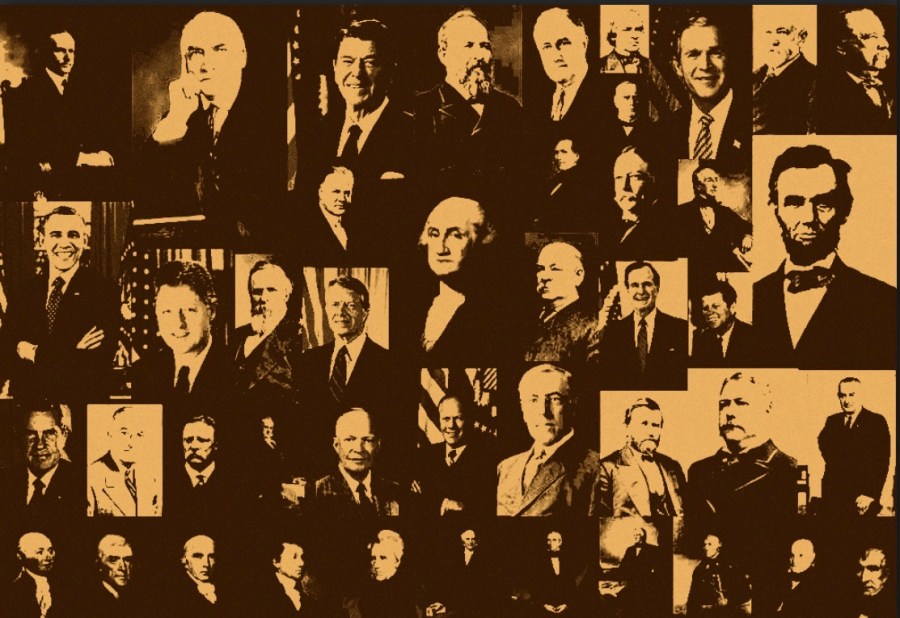
When God says to have no other gods, we cannot think that this only meant to have no other cosmic deities, as if God was only worried about people who believed in Horus but not the Pharaoh, or Venus and Mars but not the Caesar. To say that God only wanted us to avoid pagan deities, while permitting us to have human rulers, would not be telling us the whole story. These pagan societies have always had human ruler-gods to go with them who claimed to be of the lineage some pagan god in order to establish themselves as godlike and ruling through this divine connection. God is not just telling us to not have the wrong cosmic gods of the pagan pantheon, but also to have nothing to do with these statist political orders that they are bound up with. God’s instruction to have no other gods before Him was a lesson in avoiding the pagan-statist kingdoms around them in their entirety, both the mythical “gods” and the god-kings who represented them. The pagan gods were not just some stand-alone religion practiced by some people who didn’t know the One True God and to be understood as existing apart from the political systems of the day. These pagan societies and the “gods” of Babylon, Egypt, Rome, or America have always been tied up to the political institutions around them. Paganism and human kingship and rule were intertwined in a system that worked together to empower one another. We cannot then make these commandments out to have no political meaning. After all, the Ten Commandments were given just after coming out of Egyptian bondage. In these systems, the kings (Pharaohs) were thought to be quasi-divine men who were sort of incarnations of pagan deities on earth. The kings represented pagan gods which gave them a divine status on earth. The Pharaohs were sort of god-kings, just as George Washington and other presidents are depicted as gods in the Egyptian/Roman system of our time and acted as such by taking positions of political power.
The first of the Ten Commandments to have no other gods was not just a statement on avoiding the belief in pagan deities; it was likewise instruction on avoiding human rulers like Pharaohs who act as gods. As we know with the Plagues of Egypt and the episode at the Red Sea, where Pharaohs, officers, and other horsemen were drowned, when God says He will bring judgment on “the gods of Egypt” (Exodus 12:12), this evidently includes the human rulers themselves. In other places, gods and kings are mentioned alongside each other as targets of divine judgment. “Behold, I am about to punish Amon god of Thebes, along with Pharaoh, Egypt with her gods and kings, and those who trust in Pharaoh” (Jeremiah 46:25). It is not as if there is no problem with human kings so long as they don’t personally claim some divine status for themselves. The fact is that taking political power is to act as a god. Furthermore, we know that they are not actually (ontologically) gods; they are just men (Isa 31:3). Still, it is rhetorically legitimate and Biblically sound to say that human rulers are “gods,” so as to show that all human rulers are rivals to God’s rulership. The only legitimate theocracy—a society of rule by God—is an anarcho-theocracy where God is the sole ruler of a people. God never commanded His people to set up human kings, and in fact said it was a rejection of His kingship when they did (Sam 8:7). After the Ten Commandments were given to Moses at Sinai, Israel was to be a people under God’s direct rule, with no human king. God’s idea of a “theocracy” is just Him and His people, not human intermediaries.
American gods
One rebuttal we might anticipate in the land of “American exceptionalism” is that while these things might be true of other States, ie., that North Korea or China are evil and ungodly States, that this is not true of the wonderful “United States,” which is a “Christian country” and “the land of the free.” This is only a man’s idolatry speaking, as well as his regurgitation of statist propaganda he bought into since being a child. All States are set up by sinners in rebellion to God as their King, and all authoritarian rulers are false gods. The “United States” is no exception to the rule that all statist systems are part of the pagan kingdoms of the world that are contrary to Christ and His ways, and between the temple-style courthouses, Roman-columns on buildings, obelisks, Roman systems of law, memorials of presidents, and paintings of presidents like Washington as a god in the capitol rotunda, they aren’t even trying to hide it. The “United States” is no exception to this assertion that presidents are made into gods, which is rather evident in the apotheosis of Washington and in every ritual inauguration that came after him. Calling men “presidents” rather than kings, or their pagan-statist systems “democratic republics” rather than monarchies, does not change the nature of ruling men as gods. As Michael Plaisted has written,
“The American presidency is often applauded as a fruit of The Age of Reason, where man can be liberated from the dusty traditions of the superstitious old world. Democracy was heralded to be the shining example of man’s political evolution, away from the bestial ‘divine right’ of kings and emperors and charlatans. The truth is that rulers are ‘gods’ no matter whether they inherit that position from birth or by the voice of the people, like we see with King Saul, the Caesars, or with Presidential elections.”
It was only owing to a great amount of propaganda of the United States being a “Christian country” organized by our wise “founding fathers” that men can believe that this statist system doesn’t fit the bill for being an institution of false gods raised up by sinners in their rebellion to God. We need not even debate the ideas of men that supposedly existed at the time or speculate on their faith in the Lord. We know, as a matter of principle, that Christians don’t set up States, and that anyone who does set up a State is not a Christian. On this reasoning alone, there can be little debate that the “founding fathers” were Christian men. They were, in fact, a new set of civil fathers, which Jesus told us we were to call no man (Matt 23:9). However, the rather clear paganism involved in the American State is still worthy of commentary, just to prove the point that we’re only dealing with another Egyptian and Roman system. The American system is just a modern copy of the pagan statist systems of old. As Plaisted went on,
“The United States is just as pagan in principle as the pagan nations in ancient history. This is neither traducement nor libel towards American political culture, because it openly has exemplified innumerable characteristics of those ancient civilizations. What we call ‘Capitol Hill,’ the Romans called ‘Capitoline Hill.’ What we call ‘commander in chief,’ the Romans called ‘Emperator.’ What we call ‘president,’ the Romans called ‘Principas Civitas.’ What we call “appointer of supreme court justices,” the Romans called ‘ApoTheos,’ or ‘Originator of Gods.’”
Conclusion
It is amazing that the implication that Christian must be politically anarchists under the command to have no other gods is still by and large ignored today and always has been. What do they even think the first commandment means? Don’t believe in Horus, but trust in Pharaoh? We know that is not a Biblical truth (See, Isa 30-31). It’s amazing that most professing Christians don’t think the Bible has anything to do with politics, much less that the political ethic to be derived from it is an anarchist one. The scriptures are more or less one giant narrative of evil archists of pagan nations oppressing people on the one hand, and God’s people being abused by them on the other hand for their sin of believing in these people, who are in need of repenting their way out of this bondage. The whole Bible is a political economics textbook demonstrating that state rulers are evil plunderers and that God’s people don’t set up or support these systems, lest they go into bondage to men. If men truly obeyed God’s command to have no other gods, they would immediately repent of their support, admiration, and voting for human rulers. They would serve the Lord their God alone and seek His Kingdom.
 Leaving Egypt Ministries