Leaving Egypt Ministries, Obadiah D. Morris
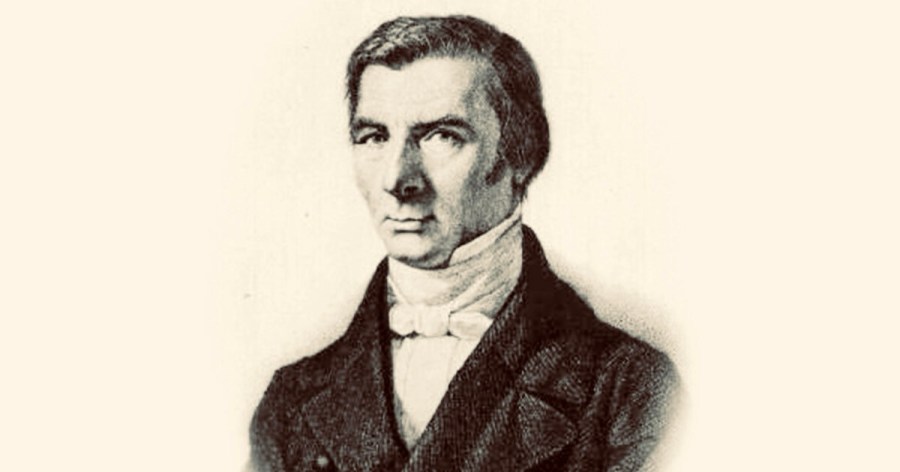
For some time I have had in the works a book on one of the great French classical liberals, Frederic Bastiat, that attempts to comprehensively evaluate his whole life and ideas. Since there is a lot of work left to be done with that project, I am anxious to make the point of how profound a bearing God had on the economics of Bastiat. To be sure, this is not as extensive as the chapter of the book I have begun. Nevertheless, I want to draw upon a handful of quotes here to try and begin to show just how well Bastiat knew that the laws of political economy, of which he was one of its finest defenders, was a providential one that had come from God, and not just one that is discovered through “reason” or whatever other methods that “secularists” use to base their economic theories on. What I want to show is that Bastiat, who is much-loved by libertarians and free market economists today, was not just writing as an economic scientist as we understand the economist today, who is part of a professionalized and specialized discipline that focuses purely on causes and effects and is not much concerned with theology or anything other than the pure science of economics, and would even be considered to be smuggling in fallacious opinions were he to suggest that God had something to do with economics. Bastiat was not just an economist in the sense that he was using logical deductions to understand the economic world around him. He was much more than someone sitting in an ivory tower somewhere trying to hash out an economic science as a purely theoretical matter detached from the God-given earth on which we live. Bastiat was writing as a man touched by the Holy Spirit who was intimately acquainted with God’s economic law on a spiritual level. He was not just making mention of God as some part of his faith that had nothing to do with his political economy on the other hand. His view of Natural Law was explicitly theistic: the ability of men to thrive in a free society was a gift from God, and to make use of these gifts was even a religious duty. It was not just that an “economic law” so happened to exist for men to discover it, or that the idea of harmony in a free society was an invention of man, as are the inventions of interventionists who seek to craft public policies to mould humans and the social order that they seek to rule over and manipulate. For Bastiat, the economic law that governed society was a reflection of divine order. It was not just that it happened to be the case that freedom is preferable to socialism, but that this is the way God made it.
The reason I write this is that this explicitly theistic grounding of Bastiat’s “political economy” tends to be overlooked in modern, secular libertarian circles, where readers aren’t very much bothered by Bastiat’s references to God in their interest for the economic and ethical principles he puts forth, but who also don’t emphasize it that much either. (Although some articles, and even an academic thesis, have addressed this theological basis of Bastiat before and its lack of emphasis. See here, here, here, and here). Moreover, his work is often confined to small circles of libertarians who are interested in his economics, when it should be penetrating the communities of Christians who have yet to see, as Bastiat always argues, that natural order is the work of God and that all state control is antagonistic to it.
So why does any of this matter? Shouldn’t we just care about the principles and theory in Bastiat? Isn’t one’s faith just an extra-economic matter that is irrelevant to the workings of a free society? Shouldn’t we just stick to the great economics Bastiat gave us and ignore the God part? It matters arguably because the “principles” or “theory” of liberty are never going to go that far unless it is returned to its rightful footing on the Rock of the Lord, who wrote the Law of Liberty into the social structure. It was not thinkers of the eighteenth through twentieth centuries who came up with these ideas of liberty and freedom, though they may have helped to developed them in writing. These are God’s Laws — the Author of the economic and ethical laws that have been exposited by theorists in recent centuries that we think of as developing the science and specific discipline of economics. However, over time, especially during the twentieth century, the ideas of liberty became almost entirely detached from God and, for that reason I argue, have been weakened. They started to be pitched as merely the deductions of secular theorists who, starting from first principles or axioms, discovered the principles of liberty that are just sort of mysteriously or “naturally” operating in the world, without this inciting them to look into a divine source for it. Economics sort of just became a professionalized discipline to be written about in the classrooms of universities, rather than the knowledge of God’s universe that should be easily accessible and ascertainable to the layman and those even loosely acquainted with Scripture or who profess faith in God. It even became an almost esoteric type of knowledge that was meant for college students rather than the average man who was living and acting in the world and ought to see how it functions. And it, of course, became entirely corrupted and perverted and buried in confusing jargon once “economists” like Keynes came along in this era of economics as a stand-alone discipline that was to live apart from a man’s connection with God.
What I submit is that, as held up against Bastiat, these writers were a regression in the body of libertarian-economic thinking, for they had stripped the Law of its Author and began to present the Law without God in the picture. Economics began to appear as just a stand-alone science that gave no credit to the God who wrote the law they were analyzing. They may have advanced more technical concepts (Carl Menger’s theory of marginal utility in the late 19th century) or written weightier and more technical treatises (Murray Rothbard’s Man, Economy, and State in the mid-twentieth century), but they couldn’t even really do what Bastiat was able to do in his simple and short work The Law, which was one of his last. Less and less after Bastiat’s death would political economists acknowledge God, if at all, and for that reason arguably lacked the ability to inspire men toward the Kingdom of God and to see just how inseparable the the workings of a free society were bound up with a love of God and His work. As they pitched it, these things were not God’s divine plan for men, but simply the “principles” and “logic” that men ought to look toward if they cared about what is now a relatively abstract concept of liberty, removed from being something that men would have to arrive at if they claimed to know the Lord. Something was amiss, and economics had even taken something of a wrong turn to pitch it purely as a science rather than the laws of God. Some late-19th, early 20th-century economists into this age after Bastiat, such as Joseph Schumpeter, would actually dismiss Bastiat as “not a theorist” because he has not writing along the lines of modern economists in these new times of the professionalization of economics that came along in the century that followed him. In his view, I guess, Bastiat should have been more “secular,” purely theoretical, and scientific; he was just a guy too focused on God who wasn’t really doing economics.
I think the opposite is the case: that the “pure economic science” stripped of God is not as good as Bastiat’s grounding of the Law in the work of God, and that what we need today is arguably a return to the Bastiat-style of spirit-filled writing that was more or less always bound-up in the acknowledgment of God as the Author of this Law of Liberty. The pure science of economics, as it came to be viewed into the twentieth century, was something of decline in the defense of Liberty and a new path for expositing these laws in a century that would turn away from God in its social theorizing and take a more humanistic approach to everything. Even Murray Rothbard had recognized that this secularism, where men thought in humanistic-philosophic rather than godly-Biblical terms, was a deviation from the theological and spiritual impressions that were always dominant upon men, and that the future is bound to be a desecularization of the ideas of liberty and a return to placing them back in God’s hands. What I contend is that it will have to be. There will be no true advancement of the ideas of liberty, nor any progress toward the attainment of these ends, without God and His blessings on our side. To strip God out of the picture has been to chain Liberty down to the ground and keep it from becoming a true abolitionist movement. For it is not just that men have held the wrong ideas and are merely waiting on a logical argument to come along and convince them that their socialism is in error. Rather, we have a sin problem, where men have bought into the ideas of statism in their idolatry, not because they read the wrong economists and trusted in their logical chains of reasoning. Furthermore, men are in bondage due to sin and in need of a Savior—one Jesus Christ—to liberate them from this bondage. It isn’t even that we need men to buy into the “principles of liberty” or come across the right economics books, but that we need men to specifically repent for the sin of statism and seek the Kingdom of God as the only alternative to the control societies set up by men in their efforts to plunder other people. It is not simply bad economic theorizing that leads men to buy into socialist doctrines and practices, but more so that their unrepentant sin and idolatry leads them to be attracted to this idea of centralized control, which is always going to be the tendency for a people who have removed God from the picture as the ultimate planner, whose plan was to put into place a law that men must live freely among each other to find peace and prosperity.
Now, Bastiat does not necessarily formulate things in this way. He does generally come off more as a theorist than a theologian as he is walking through the problems of political economy. This is why non-Christian libertarians have not been disturbed by his conclusions, though what I argue is precisely that they should embrace his theological foundation. Bastiat is not continually basing his political economy directly on cited Scripture. But it is always there in all his writing that these things—the ability of liberty to work and serve men—are really the work of God. These themes of providential liberty, where freedom works and is harmonious because it is in keeping with God, features prominently in all of Bastiat’s writing, perhaps the most in the latter part of his life (1845-1850). He is not afraid to say that liberty is fully bound up with being God’s desire, that Liberty is God’s gift to man, that men who know God seek Liberty and that God is found in this free society, and that agents of human government work to violate the Liberty that God intended us to have because they are acting as false gods who seek to undo the work of the Creator.
Though he is mostly treated as a political economist by libertarian thinkers today who admire his exposition of these theories and his superb writing abilities while writing off his mentions of God as a matter of his personal faith, Bastiat has a lot more to offer than most twentieth century economists who would strip God out of the picture entirely and turn everything into just a pure science, matter of logic, or academic discipline. We might even go as far as to say that Bastiat was a prophet, in the sense that a “prophet” refers to those who understand God’s causal universe (eg., the blessings and curses to come from liberty or intervention, respectively) and teach it to others (though not that he was given some sort of special revelation personally or that he is our “Joseph Smith” or something like that). At any rate, Bastiat’s writing is filled with the Holy Spirit on it and he was surely working close with the Lord when he wrote. It was God’s laws of economics that Bastiat was writing about, not merely a body of theory or his own understanding of things. Bastiat knew wholeheartedly that God’s true intentions for mankind were to live a free life, and he understood these principles because he was a man of God, rather than just some theorist who arrived at them after working through the logic.
God has made it possible that men can live freely should they choose His path over statism and interventionism. He has made it possible that all a man’s needs can be met in a free society, and that he will be capable of providing for others in the process. He has likewise assured that men will fail if they choose not to pursue His Liberty and chase after false gods and human “experts” to rule over him, whose perversion of law and justice and economy serves as a self-correcting mechanism built into social order.
If men want to live freely and in harmony with the economic laws of God, they can. And if men want to live in obedience to God, they must. To live according to the economic laws of God, men must avoid engaging in all forms of intervention upon His decentralized and free system of Liberty, which is always ungodly. They must avoid all forms of statism and socialism, which always require theft and violence in their very origins and which only go on to plunder further from this evil foundation that they are built upon. They must avoid erecting and supporting those evil forces on earth that work to stop man from living freely: human governments, legislators, police officers, jailers, politicians, bureaucrats, policymakers, and all those people who believe that they can take the place of God when they are but men. They must trust wholly in God alone to operate a free society and leave things in His hands as they seek His Kingdom and trust that He will provide for all those who do (Matt 6:33). They must believe that the earth and its social laws were right the way God made them and that they require no legal intrusion to make them work or to make them more equitable.
God and Liberty
Though most readers of Bastiat will pass over his references to God without being much bothered by them out of a greater interest in an economic defense of a market economy, in Bastiat’s own eyes it is not that legitimate to do this and write off his mentions of God as just some faith-based part of his thinking that ought to be confined to a “religious realm” that really only speaks of his “faith” as apart from his ideas. God was not just a part of some sort of compartmentalized and sectioned-off “faith” who took a backseat to his primary work as an economic theoretician. God and the economic law of liberty were so intertwined to Bastiat that he was sure to make mention of God in the opening lines of his most famous work, The Law.
“We hold from God the gift that for us includes all other gifts: life—physical, intellectual, and moral life. But life is not self-sustaining. He who gave it to us has left to us the responsibility of preserving it, of developing it, of perfecting it…Each of us certainly gets from Nature, from God, the right to defend his person, his liberty, and his property, since they are the three elements constituting or sustaining life, elements which are mutually complementary and which cannot be understood without one another. For what are our faculties, if not an extension of our personality, and what is property, if not an extension of our faculties? If each man has the right to defend, even by force, his person, his liberty, and his property, several men have the right to get together, come to an understanding, and organize a collective force to provide regularly for this defense.”
In Bastiat was a theological foundation for Liberty that was not just incidental but was central to his view of where the laws of freedom and the rights of man had come from. As opposed to those who think they emanate from human government, or even those who based their defense of them on “natural law,” Bastiat knew that a man’s liberty—his rights to person and property—come from God. Taxes, licenses, fees, and other usurpations of liberty are the “laws” of men, not of the Lord. These are the things that men receive upon their heads when they turn away from God’s natural order, which is absent of these restrictions upon a man’s freedom and made to function perfectly fine without them — in fact, these things work to corrupt God’s harmonious free society and prevent it from functioning smoothly. Those who disobey God’s Law, which was the creation of a natural society that was not meant to be usurped by governments and their intervention, bring man-made “law” systems upon themselves and their neighbors, and they find their people living in an antagonistic bondage where they fight against each other through systems of human government, rather than a harmonious liberty where they serve one another freely through voluntary, decentralized forms of governance that don’t exercise authority over other men. The great invasions of liberty by the State today are the result of man turning away from God’s rulership, and the subsequent divine judgment that men must pay for this choice to be ruled and guided by men rather than God.
The evils of statism are what a people deserve who decide to be ruled by the laws of men rather than provide for their people directly and trust in the laws of a free society given to us by God. Our Lord Jesus Christ made it clear that men go into bondage to false systems of (state) welfare when they go against His instruction to be servants, as opposed to the rulers of the world who lord their power over other people. These are systems of false benefactors who claim to benevolently operate in the “public good,” but who actually exist to plunder men. Though this may sound ironic to those who have been propagandized into conflating socialism with the “common good,” the society where people are actually served is one without “public servants” — or might we say, rather, that the only society with public servants is the society where men serve each other freely, directly, and voluntarily, without turning to tax-based agencies that pretend to operate in this name. The divine orders to live a just and moral life, which involves refusing to adopt the worldly-political route that sets up systems of man-made “laws,” and the idea that society works best when it is left free and unmolested by central planners or lawmakers, were made very clear by Bastiat.
“[Man] should ask himself whether, granted the aspiration of all men towards well-being and self-fulfillment, the reign of justice would not be enough to set the forces of progress into rapid motion and to realize the greatest amount of equality compatible with that individual responsibility which God has ordained as the just retribution for virtue and vice” (Bastiat, Economic Harmonies).
The “secret” to peace and prosperity is to follow the commands of God, which steer men away from setting up human civil government, which is based on false gods, theft, covetousness, and murder. If we live according to God, if we respect each other’s property and disassociate with those who invade property rights (e.g., states and private criminals), we will make economic and ethical progress. Liberty is the Godly life. Liberty is God’s purpose for man on earth, that God demands him to pursue. It is the highest calling for man. Liberty is necessary for man’s nature, the way God wants us to live. It is necessary to man’s very existence that he lives freely, for everyone that pursues the wide road of socialist destruction is paving a road of death for themselves and their neighbors.
God did not make man to be ruled by other men. It was not in His design that His people become human property of the State, that they live on a plantation controlled by Romans and Egyptians who make the orders for the rest of society. These things have been the result of a deviation from God’s intentions and commands for us, not part of God’s perfect will. The statist-socialist society that has plagued humanity for millennia is evidence only of man’s rebellion against God, not of God’s will for men. The “tradition” the centralized control societies may have on their side is by no means proof that things are the way God told man to make them. God told men that setting up human kings was a rejection of His Kingship (Sam 8), not that they were doing right by the Lord in doing so. The mere existence of human rulers, much less ones that embark upon specifically socialist schemes as did the Marxists of the twentieth century or the technocratic American regime that tracked it and still grows today, are evidence that men have strayed from God, who is appreciated by men only when they seek to live under His natural order. These system-makers, as their way of showing how much they hate God, have corrupted society from the way that God intended it to be, free from all human rule and human lawmaking. As Bastiat saw, God wanted a natural order for men, ie., a society that was entirely uncontrolled by human governments, which have intervened upon this order and created an artificial, man-made laws and restrictions of liberty. A natural, Godly order that Bastiat believed in, which for him meant a society free from government intervention, is obviously the world the way God intended it to be. Men can only live in Liberty. The socialist order of state power and intervention is what Bastiat rightly called an artificial order — an order that was not the way God intended it to be but resembled only the schemes as crafted and cooked up by men.
Seeing God in Liberty
For Bastiat, it is not even just that a Godly people should arrive at Liberty as their economic ideal, but that this natural order of Liberty and its harmonious workings itself revealed God in it. Though God points us to Liberty, Liberty likewise shows men God. A free society, he interestingly says, “is religious, for it tells us that it is not only the celestial but also the social mechanism that reveals the wisdom and declares the glory of God” (Bastiat, Economic Harmonies). It is not just that Liberty exists in God and His plan for men, but that God exists in Liberty. In Liberty can God be discovered. Look no further for the answer of how so many men have strayed from God in our times than the fact that they have strayed from Liberty. It is man’s lack of faith in Liberty, ie., in his many fears of the imagined “anarchy” and “chaos” that would exist without government rule, that express his utter lack of faith in the providence of the Lord to provide those who trust in Him alone to feed and protect them. God exists in a free society, and He turns His back on those who, by turning toward princes and kings for their welfare and protection, turn from Him and show themselves to be faithless, save a faith in statism. Only those who live freely and avoid interventionists (politicians, police, judges, and other government agents) are in touch with God; those who pursue these worldly aims, who seek the kingdoms of men as their providers and society-orderers, are decidedly enemies of God. Those who cannot see that God has set things up to function perfectly fine when they are left free are effectively blind to God altogether, because there is really no other area of life—we are talking about production, exchange, and life itself—where to deny such a thing is to deny the Lord. It is impossible for a man to truly profess he believes in God while denying the workability of natural order, which men do every time they apologize for the existence of human government, and even more so when they identify themselves as socialists and interventionists who think the State should take center-stage in the lives of men, as opposed to this fallacy where it sits benignly on the sidelines and “limits” itself to a role of upholding the law, which even Bastiat knew it tends to go beyond and pervert. If a man doesn’t love Liberty and see in it a self-regulating law that allows men to trade and associate with each other without the need for thousands of agencies and millions of police agents to enforce their edicts, he effectively cannot count himself as a man who loves God. As Bastiat wrote, clearly with the Holy Spirit working on him, we cannot “doubt the divine wisdom as manifested in the most magnificent of God’s works” — that is, the free society that He created and which is consistently subverted by government agents. The free society is the Godly society.
Just like the Biblical prophets, Bastiat knew well the consequences for violating the natural order that God wanted man to have. If we wish to avoid them, we must also avoid setting up systems of human government, which always go on to violate this God-ordained Liberty. The political systems of the world are built on violence and bloodshed, on invading bodies and property, on putting men in prisons and making them appear before courts, and robbing whole populations for all their worth under the guise of “public service.” Purposefully stunting progress and liberty is the only business of human government. Their only role in society is to step between man and God, between a man and the earth that God has given him dominion over, and to transfer the fruits of his labor to themselves. Society can make progress only if men are free, and freedom is made “illegal” when there is a government to stand over men and tell them what to do.
God has given us, in His natural order, the means for making economic progress happen, a blessing which is itself an experience with the divine and a connection with the Author of this harmonious natural order through seeing its positive fruits, the harvest of which is proof that a people are doing right by God and avoiding the political systems of the world that are used to plunder their neighbors. As Bastiat writes, “Progress [has its] roots in that marvelous and special gift that God has bestowed upon man: free will” (Bastiat, Economic Harmonies). Human governments, as a matter of course, violate a man’s freedom to act, move, trade, and benefit himself and others, and they do this, in part, to keep men from God and learning of the great blessings He bestows upon all those who keep His Law of Liberty. If men discover God as their King and as the Lawgiver who assured that societies can function without violent intervention, then human governments run out of people to deceive and plunder, and so they work tirelessly to make men enamored with artificial social orders (e.g., socialism, technocracies) the apparent need for “experts” to guide economic systems so that they can keep men as their slaves who apologize for the alleged need of “policy makers” to assure that everyone is provided for at the barrel of a gun. They make economics and economies appear to be such a technical matter that men will believe they could never do without PhDs operating central banks to manipulate money supplies, interest rates, employment levels, and every other economic variable that they make men think cannot exist without their hand on it.
Learning from our mistakes
Fortunately, God has built negative effects into the political works that seek to violate His natural laws, such that the more human governments seek to violate them, the greater the possibility that their ungodly intervention will be exposed and people will become aware of the urgent need to return to the Lord as their only King and Lawgiver (Isa 33:22). The monetary inflation by central bankers results in vast and deliberate wealth transfers from the poor to the rich and leads to recessions and depressions that wipe the people out further. The taxation used to fund “law enforcement” raises up a police state that preys on the people daily. All these things show men the great error of going against a free society as God had ordered it. The “natural order” of cause and effect, implanted in the social structure by God, functions as a “natural” teacher of the rebelliousness or obedience of men to the laws of God, showing them what it is that they need to do to amend their ways or keep on the same path. The fruit of statism and socialism is inevitably rotten, teaching men that their ways are not in keeping with that of God’s commands and that they cannot succeed in violating His Law, which both blesses and curses either obedience or disobedience respectively.
The whole idea of negative effects of intervention against God’s natural order is to wake men up to the need to return to relying on a providential Liberty. The more States destroy, which they cannot avoid doing so long as they exist, the more they expose themselves as enemies of God who work against His Kingdom, and the more they open men’s eyes to the need to seek the Kingdom of God at the exclusion of all other kingdoms. In other words, God has even made it so that the kingdoms of this world contain the seeds of their own destruction, and that all political systems, even the beloved “constitutional republics” of the world that men thought in vain were exceptional to the laws of God, eventually lead to tyranny, destruction of social order, and then utter collapse and failure. Eventually, the plunderous systems of the world, which God used as judgment against a statist people, are themselves judged. The evils and failure of statism thus function as divine judgment upon a people who thought it possible to turn from the Lord as their King and set up man-kings as their protectors and providers. They are meant to show men what results every time they think they can go against God’s commands and set up false gods to rule over them.
God’s law of cause and effect, which worldly observers may call “ethics” or “economics,” serves to teach men whether they are doing right or wrong. The success of a free society, or the failure of a statist-socialist society, exists to teach men a lesson in the laws of God. If men do not live freely, they will not make progress on this earth. As God intended, men must be free in order to make progress, and progress is necessary to bring us to God. People are stuck being the slaves of government because they have been stubborn to receive the ways of the Lord. They have written off the destruction that is always results from statism as an anomaly rather than intrinsic to these systems. They have considered them to be deviations from what the constitutional system was “supposed” to be, rather than the natural course of plunder that all human governments tend toward. Men have refused to learn the ways of the Lord even when their societies collapsed around them and provided all the evidence that one needed that they must have not been doing right by God. Instead they have pursued false idols and the false religion of statism in their rejection of God’s Liberty. As Bastiat says, if they realized that all these interventionist political systems are designed to plunder people, “they would give up their dull and stupid utopias if they did but know the beautiful harmonies of the dynamic social mechanism instituted by God” (Bastiat, Economic Harmonies). God made the world fine the way it was; human governments, which men set up in their sin, have sought and succeeded in corrupting this natural order. God made man upright, but he has sought many inventions — they have chased after political systems that God had warned would bring their downfall and corruption of their societies (Samuel 8).
To do the work of the Lord, we must seek the Kingdom of God again and trust in the salvation of God from our enemies rather than the false salvation that men believe is found in human government in their mere belief that it should exist. God wants us to make our world free of human civil government aggression, invasion, and tyranny, so that we can restore the world as He intended it. God teaches us the things that prevent this progress, so that we could never mistake them as the source, as so many other unrepentant, statist sinners do: taxation, legislation, regulations, licensure, monetary policy, and all forms of political plunder that billions of men claim are necessary to trade, freedom, and civilization itself. So long as we trust in human government to “save” us through their tax-funded agents, whether police or soldiers, God will not even recognize us as a people who need to be saved — as a people who should be liberated from the bondage of Egypt for repenting of the subject citizenship that has lead to their civil slavery. If people believe that human rulers are their saviors, then God not only sees no need to save them from these men, but even rightly mocks such a people. “Go and cry out to the gods you have chosen. Let them save you in your time of trouble” (Judges 10:14). Statists prove themselves to not be worthy of being rescued from the hands of men, because they believe that the hands of men are their saviors. When a people seek protection and aid in men, rather than to trust in God and His liberty, God makes fun of them and tells them to turn back to the false gods they trusted—the soldiers and police and presidents and legislators—who they believed were their salvation. “But where are the gods you made for yourselves? Let them rise up in your time of trouble and save you if they can; for your gods are as numerous as your cities, O Judah” (Jeremiah 2:28). God is looking for a repentant people to save, not a bunch of statists who believe in false saviors. It is only when a people repent from statism that God even sees the need to deliver them from human rulers, who they no longer acknowledge as their lords and saviors. A people need to confess their sin of statism to get out of bondage, as men had done all throughout the Bible after realizing their sinful support for human rulers had brought them into it. “Then they cried out to the LORD and said, ‘We have sinned, for we have forsaken the LORD and served the Baals and Ashtoreths. Now deliver us from the hands of our enemies, that we may serve You.’ So the LORD sent Jerubbaal, Barak, Jephthah, and Samuel, and He delivered you from the hands of your enemies on every side, and you dwelt securely” (1 Samuel 12:10-11).
Liberty was God’s gift to men, and they have thrown it away and handed their godly responsibilities of loving and serving their neighbors over to human rulers. We cannot follow the ways of ungodly men who wish to remake society on their own, as God has made it perfect the way it was: free and uncorrupted by human rule. Speaking to those who intervene upon society and man’s God-given freedom, Bastiat says,
“Why, in your pride, do you aspire to bend all wills to the yoke of your social inventions? Do you not see that this community for which you yearn so ardently, and which is to extend the kingdom of God over the whole world, has already been conceived and provided for by God Himself; that He has not awaited your coming to make it the heritage of His children; that He does not need your inventions or your acts of violence; that every day His admirable decrees make it more and more a reality; that He has not turned for guidance to the uncertainties of your childish makeshifts nor even to the increasing expression of altruism manifested by acts of charity, but has entrusted the accomplishment of His plans to the most active, the most personal, the most enduring of our energies, our own self-interest, confident that it is ever alert? Study, therefore, the machinery of society, as it came from the hands of the Great Artificer, and you will be convinced that He evidences a concern for all men that goes far beyond your dreams and fantasies. Then, perhaps, instead of proposing to redo the divine handiwork, you will be content to pay it homage” (Bastiat, Economic Harmonies).
As Bastiat saw, God has made the world work for man without violent political intervention, which only corrupts social order and tempts men into buying into the statist ideology of the world, rather than living the Godly life and keeping with the natural order, which is God’s. To seek liberty and the love of one’s neighbors is the means by which God is satisfied; the man-made systems of legal plunder and the covetousness of socialism is what makes God angry and incites His judgment upon a backward people.
Statism as a denial of God
To seek human rulers is to set up substitute gods in the place of the Lord as our King. It is only those who seek liberty who truly know God. All those who seek human rulers, which is always done under the assumption that liberty, free exchange, and private charity are not enough to maintain a society, thereby deny God as their ruler and provider for all things. As Bastiat ended his book, The Law, which was one of his final works, “Liberty is an acknowledgment of faith in God and His works.” It is only those who practice liberty, who refuse to set up systems that plunder their neighbors in the name of “public benefits,” who are walking in the footsteps of God, who sets men on a path of turning from evil and seeking righteousness. Those who seek human rulers express that they have no faith in God. Statism is nothing but an admission by a man that he doesn’t believe God can provide for those who trust in Him alone; the violent provision of human rulers is said to be a needed supplement to the alleged shortcomings of God, who is thought to be deficient when it comes to protection and sustenance, such that human kings need to enter the picture and make up for what God allegedly failed to do when He created the earth and its social laws. This is why we can say that those who support human government are ungodly men, because they don’t trust God to do these things, hence why their defense of such systems are always done on the basis of the vulnerable, poor, or “marginalized” people going without protection and welfare. Statists don’t believe Jesus that God hath even maketh the birds to eat, how much more shall He make men to lie down in green pastures and cause their vines to burst with fruit? (Matt 6:26).
Though it is the sinful ideology of statism that originally leads men to abandon God to set up systems of men for themselves, when men live in a statist society it becomes all the more likely that they will get their ideas from these artificial orders and identify them as the source of social and economic stability and progress. They will increasingly lose touch with God’s law order of Liberty, which is able to harmonize competing interests and allow men the means of making social and economic progress, and come to believe that everything they have—the false prosperity, false freedom, and false security—is due to central bankers, policy experts, “the troops,” or the police. This was the whole need to repent and turn back to the Lord, for a worldly people are precisely a people who seek the kingdoms of men. Thus the longer that artificial society presses on, the more likely it is that all of man’s thinking—this society is a product of it to begin with—will become increasingly corrupted, at least before the cracks of these “societies” turn them back to the ways of the Lord as a matter of necessity. Socialist societies help to keep men from thinking about the things of God, since the great god-State has become the center of man’s attention — the arbiter of all truth, law, and justice in society. Thus Bastiat could say that it is societies where property rights are respected and people live free “where the thought of God prevails the most over the inventions of men” (Bastiat, The Law). On the other hand, it is interventionist political societies where the statist ideology of men prevails over the wisdom of God. Since men reject God in the genesis of statist systems, the rejection of which is at the root of empowering them, how much more are they prone to doing so once these systems are in operation as the alleged source of all things good and solid about man’s experience on earth? Thus which each act of the great god-State, there is always the possibility that men will attribute all they have to this artificial organization, denying God in the process. They will come to think that “FDR saved us from the Great Depression,” without seeing that these system-makers caused the Great Depression. They will come to cite the “World Wars” as the reason to “be thankful we’re not all speaking German,” when a people who trust in God alone are not subject to foreign invasion at all.
Trusting in God alone
It is only people who practice Liberty who show that they know God and seek to make their societies the way He intended them to be. To make our society the way God has intended it to be, that is free and absent of all human rulers who try to usurp His throne and take His place, we must repent from the kingdoms of the world and seek the Lord’s Kingdom in their place. The only way to make a world of Liberty is for us to be the change we want to see in the world. We must begin to serve our people on our own and keep them from eating the benefits of state rulers that have tempted them into apologizing for their own bondage with the excuse that “at least we get something in return for our taxes.” We must recognize worldly governments as antagonistic to God and His Liberty. We must realize that seeking the kingdoms of men will only bring negative effects, because they are opposed to the ways of our Lord. As Bastiat said, “when human institutions infringe on divine laws, not only error, but evil is the result.” If we allow for intervention, either ideologically or by participating in it ourselves as government officials, we are working against God’s Law by working against the creation of a world of Liberty. God does not desire for men to make His world evil, and He will punish those who take part in it. He wants us to be free and happy and love one another and to refuse to use political institutions, which, against God, create man-made “laws” that punish other men and violate their natural, God-given Liberty. We must not allow demonic, ungodly human institutions as “governments” to corrupt our way of life as intended by God, and we must walk away from these kingdoms of the world and seek, through repentance and prayer, to be divinely delivered from them.
Freedom is necessary for men to live a Godly life; statism is a perversion of all things true about God’s natural order. The reason for all the injustices, evils, and perversions of truth in our world today is that we have walked away from God’s anarchistic society and sought to be ruled by man’s centralized control systems, which cannot be legitimately be called “societies” or “orders” at all. The only way for a society to function is for it to be in keeping with God. As Bastiat says,
“God has implanted in mankind all that is necessary to enable it to accomplish its destinies…The social organs are constituted so as to enable them to develop harmoniously in the grand air of liberty” (Bastiat, The Law).
Contrary to what statists and other political-social organizers tell us, we do not need man-made “laws” to live harmoniously and avoid the alleged clashes and conflicts of interests that are wrongly assumed to exist in a society that trusts in God alone; this harmony of interests and man’s needs is achieved by following God’s Law of Liberty and rejecting violent political institutions that intervene in God’s natural order. God created man to have Liberty, and He made sure in the process that a free society was sufficient for all man’s needs. He did not demand that men be free but leave them in need of human government as some cruel experiment where His commands were out of step with a people being provided for. God left man no instance where he needs to turn to human governors to have his needs met. Everything a man could ever need (protection, shelter, food, etc) can be found in a free society, where men, through a love of God and neighbor, serve each other freely. The Liberty that God gave us likewise the society where men may have all their needs met. It is only in the statist society, which marks man’s rebellion against God, where a man’s needs are, for that reason, left wanting. Those who do right by God, which necessarily means to seek His natural order only, are never left to starve or to be invaded by enemies. These disasters only come upon a people who have rejected God for men, who then find themselves ruled by domestic occupiers and foreign invaders.
In our submission that God has provided Liberty for us an demands that we seek this peaceful and free association among men, we should not risk implying that liberty is merely one possible alternative for man meeting his needs among other valid and legitimate alternatives, lest we think that liberty is merely preferable to statism and God is arbitrarily suggesting that men should choose Liberty over Socialism. In fact, statism and socialism eventually proves to fail men entirely and is far from just being a choice among choices. As the twentieth century market economist Ludwig von Mises said,
“A man who chooses between drinking a glass of milk and a glass of a solution of potassium cyanide does not choose between two beverages; he chooses between life and death. A society that chooses between capitalism and socialism does not choose between two social systems; it chooses between social cooperation and the disintegration of society. Socialism is not an alternative to capitalism; it is an alternative to any system under which men can live as human beings. To stress this point is the task of economics as it is the task of biology and chemistry to teach that potassium cyanide is not a nutriment but a deadly poison.”
Thus it is only Liberty where man can have his needs met. God did not give men the choice to serve Him and be provided for or to serve men and have the same. Far from it. He gave men the choice of life or death when He presented to them the path of liberty or the statist road to serfdom. For men to be provided for at all, for them to be able to find peace and prosperity and security from all their enemies, they must trust in God alone and reject those systems that violate Liberty. The State is the great violator of God’s Liberty, and all those who seek to serve God must reject it, seeing that it is no choice at all for a people in search of social order. It is statism that men must expunge for their societies if they wish to make their social order one that serves God and represents His divine will. As Bastiat says,
“Away, then, with quacks and organizers! Away with their rings, and their chains, and their hooks, and their pincers! Away with their artificial methods! Away with their social laboratories, their governmental whims, their centralization, their tariffs, their universities, their State religions, their inflationary or monopolizing banks, their limitations, their restrictions, their moralizations, and their equalization by taxation! And now, after having vainly inflicted upon the social body so many systems, let them end where they ought to have begun—reject all systems, and try liberty” (Bastiat, The Law).
Liberty is the only workable social “system” because it is the only way that God intended men to live. All violations of liberty are met with social disorder because they are out of harmony with the laws and will of God, which was for men to take dominion over the earth, not each other. All deviations from liberty result in chaos and disorder because they are rebellions against God’s natural order. God did not create human government for men to seek; men set these false systems up in their sin and rebellion against God, and they pay the price for doing so. The false religion of statism is to seek other gods than the Lord. It is to seek to violate God’s Law of Liberty with man’s arbitrary decrees against it. God does not permit men to live other than the ways He intended us to live. God is not merely giving men the choice to have order in either Liberty or Socialism, but the option of either having freedom or none at all. He does not tell us that we may rebel against Him by seeking the systems of man and that all will go well with us. He tells us that “if you turn away and refuse to listen, you will be devoured by the sword of your enemies” (Isaiah 1:20). God says that sin leads to death, not a less preferable social order. God doesn’t say that things won’t be quite as good in a statist society as in a natural order, but that “people are destroyed for lack of knowledge” (Hosea 4:6). He doesn’t say that Liberty is simply preferable to the artificial control societies of man, but that “I will punish you for all your iniquities” (Amos 3:2). He doesn’t say that statism is merely the “wrong” choice among other, equally-decent options, but that “there will be trouble and distress for every human being who does evil” (Romans 2:9). This is why all deviations from the natural order of God, which is evident today in the utter corruption of our statist societies, lead to great injustices, evils, impoverishment, and plunder. Those who seek to be ruled by men will inevitably find themselves plundered, because God does not permit men to be ruled by men without facing great judgment for doing so. When men reject the Lord as their God by setting up human governments, they find themselves living under all manners of evil, from great ones like genocides and labor camps, to the pettiest violations of their liberties, like being made to obtain licenses for travel and updating a sticker on their plate that Pharaohs force them to have in order to avoid being impounded, jailed, or beaten up by his officers. If men want to avoid the legal plunder that is the essence of all human government, they must, as Bastiat says, “reject all systems.”
The false god of human government
If we fail to live out God’s liberty and claim that we cannot do without human civil government, we are acknowledging, contrary to God’s wishes, that other, earthly men are gods. This is blasphemous. Human rulers operate as gods and pretend to be such by ruling over populations with their claims that they are the only law- and order-givers who breathe life into social order in the same way that God had created it, and that without their central planning, legislative decrees, and police forces, there would be no “law and order” at all. They essentially attempt to take the place of the Creator, making men believe that the very basis of society came from them. But as Scripture says, we know that these Egyptians are only men and that their horses are flesh. Human rulers are really just pretend-gods, not actual gods, although it is still rhetorically legitimate to brand them as such in order to illustrate their position against the One True God. They are not actually capable of organizing society and bringing the peace and prosperity they profess to bring with their violent rule over them; this is only given to men by God. Even if they imagine themselves to be functioning in the place of God, this is merely their own ego and pride rather than any real capabilities they possess. As Bastiat says, “If they are sent from God, let them prove their high calling.” While human rulers have always pretended to have been “ordained” by God to rule over other men, the whole “divine rights of kings” propaganda was always just a man-made doctrine to justify these human rulers, against God’s first commandment to have no other gods. Bastiat saw through these claims to divine rule, which was only device for controlling a people who were too idolatrous to see through their schemes of “public safety” and other such professions of their great capabilities of serving the people.
“What they desire is supreme authority, the most absolute, despotic power that ever existed. They not only desire to control our actions; they even go so far as to propose to alter the very nature of our feelings” (Bastiat, Economic Harmonies).
God’s creation as made for liberty
Those who submit that we are in need of men to rule over us necessarily deny that God had made the earth right when He created it — that the way He set up the world so as to allow for peaceful human associations is, in the words of Bastiat, “revealed in the infinite variety of climates, seasons, the forces of nature, and individual aptitudes, assets that God has distributed so unequally among men with the sole aim of uniting them through trade and through the bonds of universal fraternity.” There is no need for central planners in our world to arbitrarily decide what the use of natural and human resources must be; God has set things up—both the disposition of men and the placement of the earth’s resources—in a way that men can arrange for their use and needs without the need for tyrants and their political systems. Socialism is always and everywhere a denial of God that places in the hands of men the divine abilities to manage the affairs of whole populations. It is ego, pride,and envy turned into a political ideology. As part of making sure liberty is the harmonious society for men, God set up the world and distributed the resources the way He did so that humans would have to come along and engage in voluntary exchange with each other and be a part of peaceful society if they wished to serve others and be served. Human rulers attempt to corrupt this by making men believe they are needed to act as gods in society if there is to be “equitable distribution” of resources or for certain so-called “public goods” to be funded. Human governors attempt to place themselves between God and men, so as to prevent us from noticing God and His works. They attempt to make men look to them as the saviors rather than God and his Liberty. But God has designed the earth and its natural social system—that is the free society without the existence of a State or its socialistic intervention upon men and free trade—in a way that Liberty works and that statism does not. God’s creation of both earth and man was done in a way that was only conducive to Liberty, and that all departures of this liberty would spell disaster for men as a means of waking them up to their march down the wrong path of human rule. All statist societies—whether they fancy themselves as democratic, republican, socialist, communist, fascist, or whatever other man-made political theory—fail to serve men in the near term and long run as the very proof that they have run afoul from God and His social order, who instead wanted men to live freely and associate with others on that basis. If men could exist in isolation and self-sufficiency, there would be no society and no need to care for your neighbors, and so things are the way they are because God intended for men to have a voluntary, anarchistic order where no state intervention was to infringe on His desire for peace and harmony. There is no society that requires “public welfare” for the charity of our neighbors, and any people who practice it only enslave their neighbors by coveting the property of other neighbors to pay for such schemes, which in the end don’t even serve to aid the poor. The only way to help the poor is for the people to do it directly themselves; the statist systems of the world are incapable of carrying out this great responsibility of obligation of men. If men refuse to take up their godly duties to their neighbors, which can only be done when the are free to do so, then this is their own fault, and they will pay the price by going into bondage to socialists who thrust upon them artificial orders and their many schemes, only to find that this is no system for providing for the people.
Those who wish to have peace and prosperity must then break free from the ideology and practice of statism that leads them to set up and support human government against the wishes of God and His Law of Liberty. As Bastiat says,
“We must set ourselves unceasingly and relentlessly to the task of freeing the whole domain of private activity from the encroachments of government. Only on this condition shall we succeed in winning our liberty or assuring the free play of the harmonious laws that God has decreed for the development and progress of the human race” (Bastiat, Economic Harmonies).
The kingdoms of the world and the decrees of their kings and lawmakers are at enmity with the Kingdom of God. It is only when a people submit to God and His natural order that they can live freely from false gods and avoid the snares and traps of these man-made systems that bring men into bondage through dangling benefits and privileges over their heads, where, if a man takes them, he becomes complicit in his own bondage. The commandments of God condemn theft as immoral, and thus the man of God cannot support such systems of taxation or accept the benefits of these systems, lest they be men who covet their neighbors’ property and prove themselves to be lovers of evil. To be a tax-collector or a tax-recipient is against the commandments of God. It is not just the taxman who steals, but also the man who accepts his neighbors property in the form of government handouts. These systems exist as violations of God’s Law, and all those who partake in them likewise do the same. The God-given right that men have, as identified by Bastiat, is the right to Liberty — to own, exclusively for ourselves, the property that we acquire voluntarily. Stolen property, such as that controlled by the government, is illegitimate property and is acquired and possessed in direct violation of God’s Law. When men pursue political control societies, they pursue anti-social means of human association that are not in keeping with God’s commands, and for this reason produce negative results. Again, the laws of God—that liberty is the only social order conducive to harmony and society—teach men that they have either deviated from truth or are doing the work of the Lord, by (respectively) leading to either disorder or harmony between men. The negative or positive effects of statism or liberty respectively teach men the laws of God, that they might get on the right path again. As Bastiat says.
“An economic moral philosophy aspires to…address men as victims of plunder. It shows them the effects of human actions and, by this simple demonstration, stimulates them to react against the actions that hurt them and honor those that are useful to them. It endeavors to disseminate enough good sense, enlightenment and justified mistrust in the oppressed masses to make oppression increasingly difficult and dangerous” (Bastiat, Economic Sophisms).
If men knew the ways of the Lord, they would never take the evil statist route of social organization, which assumes there is something wrong with God’s creation that needs to be remedied by the sword. They would see, as Bastiat says, that “freedom is better than constraint and…God’s laws are wiser” (Bastiat, Economic Sophisms). The wisdom of God, our Creator, is that the only way to lasting peace and prosperity between men is a natural order unmolested by human government, where men resolve their own needs and disputes without the need for human rulers. When men fight against the natural order of liberty, they fight against God, who wills that all men be free. The corruption and injustices in our society today, which statists like to argue would be the case without their government, are actually the result of violating God’s Law of natural liberty. There is nothing wrong with God’s earth the way He made it, such that human governors must come along and impose their will against God’s Law of Liberty. Just as God says He was satisfied with His work at creation, so Bastiat tells us that “God was pleased to establish this fine harmony in the moral world” (Bastiat, Economic Sophisms). To live by God’s example, to live as He intended us to live, we must practice moral lives ourselves. We must refuse to ideologically support man-made systems based on theft, murder, and the “laws” of men. God does not approve of violations of His Law because they have been done under the name of “government” or “public welfare,” which are only corruptions of words meant to justify their existence as people in the service of “the people.” He will punish acts of theft whether they are committed by governments or by private individuals. God does not recognize flags, badges, and uniforms, as exemptions to His Law.
God has made His earth one that operates perfectly well when it is left the way He intended it. God’s Law, however, is abandoned when men intervene in this order with man-made “laws,” when men believe they have the authority to convene in congresses, councils, and courts to make their own “laws.” This is the trouble of our world today, the source of all our conflicts, scandals, evils, degeneracy, and injustices. We must realize that the world must be left free the way God intended it and that the path to restoring it to God’s intentions requires that we practice these principles ourselves. As Bastiat says,
“Society…has within it a natural and providential force, a law that increasingly causes the principle of iniquity to retreat and the principle of justice to be realised….This force is within society and that God has placed it there” (Bastiat, Economic Sophisms).
Bastiat and the Bible
For anyone familiar with Scripture, it is impossible to miss how much of a bearing it had on Bastiat’s work. Much of his calls for the righteous path that we need to seek, as opposed to the evil path of domination by human government, sound just like the prophets. Here specifically, Bastiat is more or less paraphrasing the prophet Isaiah:
“Reform yourself, purify yourself, stop committing evil and do good. Overcome your passions, sacrifice your personal interest, cease to oppress your neighbor whom it is your duty to love and care for. Be just above all and then charitable” (Bastiat, Economic Sophisms).
Compare this to Isaiah:
“Wash and cleanse yourselves. Remove your evil deeds from My sight. Stop doing evil! Learn to do right; seek justice and correct the oppressor. Defend the fatherless and plead the case of the widow” (Isaiah 1:16-17).
It isn’t quite good enough to think of Bastiat as merely some “secular” economist who was theoretically hashing-out the logic deductions of first principles to arrive at the economic systems that was most efficient, or something like that. Bastiat wanted men to wake up to God’s ways and realize His purpose for us. God loves us and is ashamed that we, as His children, have allowed others who claim to be our brothers to violate His Law by substituting human governments for a free society under God. Bastiat was not just another economist who had arrived at these truths of liberty through principles alone. He knew and taught Liberty because it is God’s way. It wasn’t just by some philosophical standard that Bastiat had arrived at the necessity for Liberty over state control. He had a divine conviction that his conclusion of Liberty and free trade was correct. Although he still provided it, there was really no reasoning or logic necessary to prove these points. Liberty is the order of God, and for that reason alone is the only workable social order. He even went as far as to swear to God that his convictions were true:
“In my soul and conscience, before God and men, on the memory of my father, mother and sisters, on my eternal salvation, by all that is dear, precious, sacred and holy on this earth and in the next, I believed that my conclusion was accurate” (Bastiat, Economic Sophisms).
Bastiat knew that the laws of liberty were not just his own or even the result of some classical liberal tradition that had begun before his time. They were the laws of God. The workability of a free society, where things function in harmony apart from human gods to centrally plan them, is the divine work of the Creator. For Bastiat, it was not just that one could logically deduce the preference for freedom over constraint, but more so that he was providing a godly defense of natural order, based in his understanding of God’s creation. Man-made laws are opposed to God’s Law, and for this reason alone will not work. Strictly speaking, economic logic isn’t even needed. If God has not commanded men to embark upon statist schemes and says that all those who do will fail, then they won’t work for none other than “thus saith the Lord.” Though little harm can come from logically deducing these truths too and writing thousand-page treatises to prove it, strictly speaking it is not necessary for the man of God to arrive at these truths through these means, nor is it needed that he have some empirical proof that the natural order God designed is superior to the artificial orders that men want to make through their systems of power. These things can be discovered through the word of God and the Holy Spirit alone. Of course freedom is preferable to the police club, of course it is better to trust in God than to trust in men (Psa 118:8). The false gods of human government are only corruptions of God’s Law, and are raised up in violation to it. As Jesus taught, a corrupt tree can only bear corrupt fruit. There is no possibility for human government to bring any good to society, because it’s very roots are planted in violating God’s commands against theft and murder. How much less can we expect the things that come after its origins to be righteous, fruitful branches when they stem from this wicked tree that was raised up against God?
To serve God or men
The Bible calls us to come out of the world entirely and seek God’s Kingdom. To repent from voting, raising up false gods, and believing in salvation through political systems and these human system-makers. We cannot succumb to the corruption and evil of the world that makes us believe that socialism and human government, which are but the same things, are the paths to freedom. This is the primary temptation in the world that keeps men from God! This was Satan’s temptation of Christ: just worship me and serve these human domination systems, and everything will be good and well with you. The prospect of peace, prosperity, and privileges through human government, which may well be obtained by some at the expense of their neighbor’s liberty, are a means of tempting men out of seeking God’s Kingdom. They see the sign-on bonus for the military or police department, the education and pension packages, or the immunity from prosecution for their misdeeds, and think that they may well forsake the godly path for worldly income and pleasures. Human governments essentially try to turn men away from God and His work in every way possible, by both preventing the fruits of His Liberty and corrupting men’s minds away from the things of God. As Bastiat says of the mentality of these human political systems,
“Let us, then, prevent him from following his impulses; let us stifle liberty; let us change the human heart; let us find another motivating force to replace the one that God gave him; let us invent an artificial society and direct it as it should go” (Bastiat, Economic Harmonies).
Those who fail to seek God’s Kingdom and instead pursue the political domination society where men rule over other men do so at their own peril. Contrary to those proud rulers of the Bible who thought they could get away with such schemes, God does not fail to notice our misdeeds and evils. As Bastiat points out, “God is mindful of all” (Bastiat, Economic Harmonies). God is everywhere and He is always looking out for those people who fail to take up His command of Liberty. God created man to be free, not to pursue worldly political systems that operate on theft, violence, incarceration, and murder, and which plunder the product of the free and private producers of mankind. The Dominion Mandate was God’s instruction to grapple with nature, conquer the terrain around them, produce goods, form families and provide for them, and strengthen the hand of your neighbors to do the same, not to rule over other men and steal their property or produce. We are to approach our earthly lives as stewards of God’s creation and keepers of our brothers’ needs, not as political plunderers who seek to steal, kill, and destroy through their false systems of government. As Bastiat says,
“God created the world. On the surface and in the bowels of the earth, He placed a host of things that are useful to man in that they are capable of satisfying his wants.…He placed men in the midst of these raw materials and these forces and bestowed them upon him gratis. To them men applied their energies; and in so doing they performed services for themselves. They also worked for one another; and in so doing they rendered reciprocal services. These services, when compared for purposes of exchange, gave rise to the idea of value, and value to the idea of property. Every man, therefore, became, in proportion to his services, a proprietor” (Bastiat, Economic Harmonies).
God-given liberty
God made man to keep the fruits of his labor, not to be robbed by other non-producers calling themselves “the government.” God made men to sit peacefully under their own vine and fig tree, and men squander this liberty and natural order only when they believe they are in need of men to rule over them and direct their affairs. God wanted men to be involved in free, mutually beneficial exchange, not the coercive and violent exchange that comes with human government and its system of taxes and tax-funded benefits. All involuntary exchange is sinful, ie., rooted in theft against other people. Thus, all those who preach another economic order than private appropriation of property and free trade preach another doctrine than that prescribed by God, which was for men to homestead land, produce their own goods, provide for their families, and sell or give away the rest of their product to their neighbors in trade or charity. The violent collectivism of statism, where “society” is seen as a whole in which to plunder, is a slavery to the “common good” that is against God’s desires that men freely produce and serve each other on their own, freely and directly, without the use of violent and false benefactors who claim to exist for the “public welfare” but which rob our neighbors in order to provide goods and services to them. The trouble has always been showing people the ways of God, rather than the tempting ways of men, which, through taxation and inflation, make it appear that men can get something for nothing. As Bastiat says,
“The common people listen eagerly to the zealots who preach communism, which is slavery, since not to be master of one’s own services is slavery; and yet they disdain those who on all occasions defend liberty, which is the common sharing of God’s bounty to man” (Bastiat, Economic Harmonies).
God gave man Liberty, and those who accept tax-based forms of government, which are always socialistic, are rejecting God’s Law for human plunder systems that operate on coerced “charity” rather than the freewill offerings that make up the Kingdom of God. It is the free society, where men sort out their own needs without the use of the entities we know currently as “States,” that God has provided for us to serve others. It is in a free society that contains all the mechanisms, voluntary and decentralized, for building a people up and allowing them to serve one another in ways the human government can only disrupt, distort, and utterly pervert. It is in this free society, where men associate with each other without recourse to political violence, that demonstrates just how great God’s natural order is compared to the socialist inventions of men. As Bastiat says of competition, markets, and voluntary exchange over the monopoly and compulsion of the State, “no law attests more strikingly to the immeasurable superiority of God’s plans over man’s futile contrivances.”
When men substitute men (rulers) for God, artificial laws for His perfect Law of Liberty, and trust in governments, central planners, politicians, and social engineers rather than the Lord to work things out for a people in a state of freedom, they attempt (in vain) to undo God’s plan for men and begin to turn their societies around backward. Rather than make progress, they decline. Rather than achieve prosperity, they experience economic regression. Rather than find law and order, they reap lawlessness and disorder. Rather than build community with their neighbors, they build walls between them. God allows men to practice statism and socialism if they wish to turn from Him, but He doesn’t allow them to avoid the effects of this sin. All those who seek man-made systems of authority show that they do not believe in God’s salvation, and so God leaves them to succumb to the wounds they have nurtured in their corrupt socialist order, which is “order” only in the sense that there are order-givers and order-followers, men who make the rules and men who obey them, men who carry people off to cages and men who get inside them. If men want to make contracts and covenants with false gods, as they do when they support “constitutions” and human government, then God allows a people to fall under the sword of men who claim to exist for their welfare and good, but who actually exist to enslave them. As Lysander Spooner said of this idea that States rule by the “consent of the governed” and exist to serve the people, “The only idea they have ever manifested as to what is a government of consent, is this: that it is one to which everybody must consent, or be shot.” If men beg for human plunderers, God says, “Go ahead, just don’t come crying back to me when it doesn’t work out.” Though God allows men to throw away their Liberty, He does not allow men to violate His Law. The satanic temptation to rule over other men, or to elect and support men to rule over others, must be punished for the idolatry that it is. God gave us everything we could ever need, both in resources and the natural law that manages them, and then men pass off these godly responsibilities to human rulers, throwing away God’s Kingdom order with it. They show that they do not appreciate the works of God and are ungrateful for His blessings, and so they bring upon themselves the curse of human rule, resource misallocation and waste, and a million other evils. They don’t believe that a free society can work, when everything was set to go the way God made it. As Bastiat says,
“God has lavished on His creatures the gifts of heat, light, gravitation, air, water, the soil, the marvels of plant life, electricity, and many other blessings too numerous to mention. And even as He has implanted in each man’s heart a feeling of self-interest, which, like a magnet draws all things to it; so has He, in the social order, provided another mainspring whose function it is to preserve His gifts as they were originally intended to be” (Bastiat, Economic Harmonies).
The “mainspring” Bastiat speaks of is voluntary association, which we must conceive as diametrically opposed to the coercive, involuntary, compulsory, and abusive nature of man-made systems of government. The harmony, peace, and prosperity that Liberty gives us is the way to prepare our world for God. The methods of human rule—taxation, regulations, restrictions on trade—lead us to poverty and conflict, and they do the opposite of preparing the world for God: they court the Devil and lead men off a cliff to Hell.
Though some men have accused others of “worshiping liberty,” it is hard to think this is some criticism that we should dodge given that it is in the workings of Liberty—the ability for men to be free and prosper by trusting in God alone as their Lord and King in the absence of human dictators and planners—that God has really revealed Himself and His works. As Bastiat says,
“[The harmonious laws of liberty] deserve to be blessed as the most striking manifestation of God’s impartial concern for all His creatures” (Bastiat, Economic Harmonies).
God gave mankind Liberty. He gave them natural freedom. How could one look at the “natural laws” of economics and ethics, which demonstrate the case that men thrive and prosper in a free society, and not marvel at the great work that the Lord has implanted in the network of social order at creation? As a sort of final blow against the socialists of the world who believe they can rebel against God by setting up systems of centralized power and command, God has the last laugh for having made these systems ultimately unworkable, albeit highly capable of destruction before their failure, which He has used as a means of rebuking and correcting those who have mistakenly believed they could play God or have other “experts” and “planners” do it for them. There is no salvation in the State, notwithstanding the lies of many millions of fools who believe that “the troops fight for our freedom” or “the police keep us safe at night.” God has made it so that peace and freedom is only found in a free society that submits to His laws. As Bastiat tells us, the solution to social order and peace “is derived, not from despotic contrivances, but from the organization that God has given to man and to society” (Bastiat, Economic Harmonies). We must not allow ourselves to be deceived by the idea that human government can “save” a people and provide for their welfare or protection, which is what people seek by apologizing for its existence. We must not believe that we can take part in this artificial organization of society, knowing that it is not only going against God’s natural order, and for that reason is bound to fail. The deception of human government, whereby people believe that politicians and presidents are going to save the day for them, is a satanic trick to turn men away from Liberty and hence away from God, or vice versa. Those who seek to rule other men or to be ruled by men are under satanic deception. They are being turned away from the Dominion Mandate to the idea that they should dominate other men. On the other hand, those who find Liberty have found God, who is the only path to liberty. Bastiat saw more clearly than anyone that things are just fine the way God has created them, and that there are no ends that men need to achieve so badly that they require a State to violently intervene for them.
“Let us, therefore, not have the presumption to overthrow everything, to regulate everything, to seek to exempt all, men and things alike, from the operation of the laws to which they are naturally subject. Let us be content to leave the world as God made it” (Bastiat, Economic Harmonies).
There is no salvation to be found in artificial organizations — in socialism, “government,” “public health orders,” or anyone who wishes to impose their ideas upon others. Salvation is only to be found only in the Lord, who grants His people Liberty when they seek to live by His laws. There are no sort of “collective ends” that justify the use of violent means to attain them, and this is further proven by God’s law of economics which assures that these ends cannot be attained anyway through the violent pursuit of them. Rather, all the supposedly “collective needs” of a people—let us concede this term for a moment—can be found in a free society. They do not require artificial political organization that attempts to collectivize people under a State. God assured even that the needs of “the collective,” so to speak, are met only in a free society. As Bastiat says,
“The one for all, and all for one motto advanced by the socialists and proclaimed to the world as something new to be found in budding form in their social orders based on oppression and coercion has actually been provided by God Himself; and He derived it from liberty” (Bastiat, Economic Harmonies).
The governments of the world, which are really only ostensibly “governments” that pretend to exist for the “service” of “the people,” are not agencies that represent the Kingdom of God, which Jesus says is not like these worldly institutions. God’s “system,” so to speak, is Liberty, and it is Liberty where God is found and seen. There is perhaps no great observance that men can make that God had his hand in something than the harmonious operation of a free society that doesn’t depend on human rulers to function. From the complex biology of man himself, to the evidently providential design of the social laws that work to maintain a free society, God is seen in all His glory. God did not just make men and the animals, brilliant in themselves, and then fail to assure that they could function in a free society. He also gave us the “natural” social laws that allow them to live freely. Seeing this, we need not wonder where this Law of Liberty came from that allows for social progress in the absence of political intervention. As Bastiat says, “God, I say, provided it; and He did not establish His law in a model community” — by which he means that artificial social organizations—that is human governments and their socialist dystopias—are not the work of God (Bastiat, Economic Harmonies). The systems of the world fail because they are set up against God’s great law of liberty. They attempt to make “law and order” out of force, but succeed only in corrupting both. This is because God made it to where all things, even those supposedly exempt goods that need to be in “public” (ie., State) hands, function best when they are left free — that is when they are not bound by the satanic governments of the world and administered through robbery of the people. The failure of socialist societies is really one of the prime examples of God’s glory on this earth, for they demonstrate that the greatest schemes of men, hatched by the “great” intellectuals of the world (eg., the Marxes and Keynes’ that worldly men often find truth in), are no match for God’s natural order, which functions all on its own. The glory of Liberty is that it puts to shame all socialistic, statist inventions of man. As Bastiat writes,
“God has provided [for economic progress] on a general, world-wide basis, through a marvelous mechanism in which justice, liberty, utility, and social consciousness are combined and reconciled to a degree that should dampen the ardor of the planners and builders of artificial social orders” (Bastiat, Economic Harmonies).
Those who defy Liberty defy God, for Liberty is the work of God. As Bastiat explains, really hitting home at the original thesis that we seek here,
“To go against Liberty is to go against the will of Providence; it amounts to suspending the action of God’s law” (Bastiat, Economic Harmonies)
Those who think they can set up human systems of government and plan whole societies prove themselves to be Godless men who believe they can play God in His place, or rather, they prove themselves to believe in the false god and false religion of statism. This is why God must prove their pride and arrogance wrong and destroy those who attempt to destroy His creation. This is why all statist and socialist systems must come under judgment for their great and deliberate deviation from the laws of God, which proves these human schemes to be futile. Those who seek man-made political schemes are men who hate God. And the overt socialists and Marxists of the world made little attempt to hide it, either. Their godlessness, in turn, not coincidentally resulted in seeking man-made schemes, for all those who abandon God will seek other gods, which most often means that men will arrive at the State as their lords and saviors. Those who know God seek Liberty, and seeking Liberty is in the very least evidence that the love of God is in a man’s soul, even if he has yet to realize his love of natural order is necessarily a love of God’s creation as He intended it to be left. The main means by which a man can rebel against God is to seek to live under human rulers. It is seeking human kings that exist as the most explicit instances where God says a people have rejected Him as their King. The main concern among God is His kingship, which men abandon and reject when they seek man-kings as their protector-saviors. To not seek to live in a free society, ie., a society that is absent of human rulers and economic controllers, is to fail to seek to live by the Laws of God, which have their great expression in the free society. To seek something other than Liberty can only be done by abandoning the Law of God. The main means by which the evil one seeks to get men to forsake their Lord is to get them to forsake Liberty for the satanic governments of the world, in the same way Jesus Christ was tempted with having control of the kingdoms of the world (Matt 4). All politicians are, by definition, servants of Satan.
Seeking God’s liberty
God has given Liberty to men as his chief pursuit, and we ought to set our eyes on it as our God-given inheritance to be free from men. This Liberty, Bastiat says, is an “eternal principle that God has clearly ordained for the preservation and improvement of mankind….It is a principle, furthermore, that leaves the way completely open for the action of motives of a higher order that God has also implanted in men’s hearts” (Bastiat, Economic Harmonies). The only way for men to sustain themselves is to be free; to sinfully seek human rulers is to become captives to men and their many schemes. God has not given us a created earth and mankind that was cursed and irredeemable, as some Christians tend to look at things in a very nihilistic and escapist way. Rather, God has made it to where men can have all their needs met if only they will see that they must choose the free society that God has given them to accomplish these ends, and to reject the artificial orders of man-made systems as ungodly and antagonistic to His law of economics. Bastiat says, rather optimistically,
“When God implanted in every man an irresistible impulse to achieve the good…from that very moment He decreed that mankind was perfectible, and that…mankind would ever advance toward the endless promise of a better world” (Bastiat, Economic Harmonies).
In other words, for men to improve their lives, produce the goods and services that societies need, hone their talents, and try to make for themselves and their neighbors a better life, they must be free. To be free, however, one must turn to God for their Liberty. Liberty is God’s to grant, and it is given only to those who seek to be His, which necessarily entails that they must turn away from the systems of the world that are raised up against Him. If one treats earthly men as gods, they will be shunned by the only one and true God, the God who gives us Liberty and is the keeper and dispenser of peace and prosperity.
There is no necessary or inevitable reason that men must live under statism. State rule, after all, is a divine curse and judgment that was put upon men by God, against those who rejected His kingship and sought other kings. It stands to reason this burden could be lifted just as easily as it was placed upon a people who rejected God. But men need to repent and begin to seek His Kingdom and His righteousness. They must turn back from their idolatrous ways that have led them to pursue other kings and kingdoms, which were of the world and not of Christ. From there might they make progress from the path of social decline they are currently on for having sought many inventions and political schemes. God did not make a mistake when He set up the world for mankind to be free. As Bastiat said, “what God does, He does well” (Bastiat, Economic Harmonies). If we defy God’s intention of Liberty for men, we ourselves are guilty of all the evils that follow, even while considering that we may well call these evils to be divine justice, for us having been unjust. The choice to seek God’s Kingship, or the false kingship of men, has been left by God into the hands of men. It is up to us which one we shall choose, Liberty or statism. As Bastiat saw, “God has given us free will” (Bastiat, Economic Harmonies). We must, therefore, use that free will and live freely. To not live freely is to go against God’s will, and we will be punished for doing so. But God leaves it up to us to learn and decide. As Bastiat says,
“If we face the facts courageously, we shall see that a large area has been left open for the exercise of our initiative. Here, as everywhere else, man can choose between two possibilities: either the pain that he imposes upon himself—foresight, labor, virtue, the effort of will needed to act in conformity with universal law, deliberate co-operation with the will of God, an act of sacrifice that becomes a joy, a struggle with himself that raises him above his finite nature—or the pain that is imposed upon him, the punishment he suffers, in a position of passivity in relation to beings of a lower order, a lesson forced upon the intelligent creature by inanimate or unconscious agents, a consciously felt fall from his position of eminence that places him on the downward path which leads to a degradation still more profound” (Bastiat, Economic Harmonies).
To turn from the free and natural order that God has made for us puts man on a downward path to hell on earth, rather than upward one of slow but steady progress of grappling with the nature around him and beginning to improve his lot and that of those around him. Being that Liberty is God’s Law and Order, all those who turn from it not only turn from God, but they also find themselves living under Socialists who rule over them and their property. Those men who suggest that we must become socialists and statists ourselves, whether through the ballot box, campaigning for office ourselves, or even through violent revolution where we “seize the means of production” or replace the state rulers with another batch of men, do not understand that God grants liberty to those who seek Him, and that the essence of this Liberty is that he will no longer be ruled by men who claim to have his best interests in mind, who sacrifice him on the altar of the “common good” and expend his liberty in the name of equality or safety.
Those who claim to be fit to rule over men claim themselves to be exceptional humans, made different from the rest of mankind. They claim themselves to be gods, when God says that all of us are made in His image and fit for the works that He has put before us. There is nothing special or exceptional about some men that makes them fit to be legislators or presidents, as God has given this title to no man whatsoever. Those who call themselves the “government” are merely men, like us, albeit who attempt to take God’s place by seating themselves on a human throne and bestowing upon themselves the claims to honor and authority that they make others believe they possess in order to have the public legitimacy to carry out the heinous and plunderous acts that the slavish people call governance, but which in fact are nothing more than legal plunder, that is theft with the blessing of “the law” on their side. Government agents are men who are merely pretending to be God, pretending to be capable of creating a society as good as God’s, pretending to be the source of Law and Order, when God is, in fact, the only true source. There is nothing exceptional about the man who claims a right to rule another man, save that his pride and audacity is exceedingly greater than the average man of humility who possesses no such plunderous ambitions for power. As Bastiat says,
“Where has God implanted the motivating impulse of human actions and the longing for progress? In all men, or only in those men who have received or usurped a legislator’s mandate or a bureaucrat’s authority? Does not everyone of us carry within himself, within his very being, that indefatigable and boundless motive force which we call desire? As our more basic and material wants are satisfied, are not new desires of a higher order constantly forming, overlapping, expanding within us? Does love of the arts, of literature, of science, of moral and religious truth, does the thirst to know the answers to the problems involving our present or future existence, descend from society to the individual, that is, from the abstract to the real, from the merely verbal symbol to sentient and living beings?” (Bastiat, Economic Harmonies).
To think that man are the makers of order is to forget our Maker, just as Israel had done in the Bible by seeking after other human rulers and protectors in their idolatry and insatiable lust for men to provide for them (Hos 8:14). This is why all quests for human rule are rooted in a denial of God’s Kingship, for they make man the Author of Law, rather than to recognize that God has already authored it into existence at creation, and that no human amendments are needed. If we believe that the human government, rather than God, is the source of Law, Bastiat asks, “are you not putting morals, doctrines, opinions, wealth, everything that makes up the life of the individual, at the mercy of the men who one after another come to power?” (Bastiat, Economic Harmonies). God did not want us to be at the mercy of men, as we so clearly are by accepting the state-rule of society; He wanted us to live under His Law, the Law of Liberty—of peace, harmony, free trade, and voluntary association.
The reason the State has presented itself as the savior of mankind is because people necessarily turn their backs on God when they accept that it is true that human lawmaking brings order to society, that men depend on “congresses” and legislators, “executive branches” and presidents, and soldiers and police to have law and order. The State is always and everywhere an attempt to turn men’s eyes away from God as the Author of a Law that enables them to live freely under God without human rulers, and to make them think that the very source of society itself is human rulers — that “taxation is the price we pay for civilization.” The State attempts to present itself as a source of law and order, when God is the only true source of Law, and they do this knowing that it is easy for men to be weakened by the temptation of a false freedom, a false security, and false prosperity. Bastiat knew that the tendency of the State was always to become all the things that everyone said it was needed to fight against — that the tyrants, thieves, and warlords that are supposedly prevalent in a society without human government to “protect” us are, contrary to the claims of statists, actually manifest in the statist society.
“If the state cannot go beyond certain definitely established limits without becoming an instrument of injustice, ruination, and plunder, without upsetting the natural distribution of industry, satisfactions, capital, and manpower, without creating potent causes of unemployment, industrial crises, and poverty, without increasing crime, without having recourse to ever more stringent repressive measures, without stirring up discontent and resentment, how will it derive any guarantee of stability from these accumulated elements of civil disorder?” (Bastiat, Economic Harmonies).
State rulers try to substitute themselves for God, but they always fail to keep any of their society-wide schemes under control and inevitably expose themselves as being in evident conflict with the laws of God, as seen by their inability to manage all the disruptions that they themselves have created among men. The false promises of law and order that they made in order to grow their power and remove Liberty and God from society prove to be failed adventures in intervention that succeeded only in worsening the conditions that they made men believe they were sent to alleviate.
Dominion and Liberty
It has been one of the great perversions of God’s commands that men have extended the Dominion Mandate to the domination of their fellow man, when God gave it only over the earth and its resources. Men have justified human rulership when God never gave the command for men to rule over others, and only ever said that human government and invaders comes upon a people as judgment for turning away from His Kingship. The only just and moral action of men, in the eyes of God, is to associate with others on a voluntary basis, which includes the freedom to appropriate property for oneself, trade those goods with others, or give them away. God did not give men the right to tax others, which is only a euphemism for robbery; this political slavery came upon men precisely because they believed that they needed human government, when God had given men Liberty for their Order. To have extended God’s command to be fruitful and multiply into a command to plunder your neighbors and set up systems of human government against God’s Liberty has been the great crime of humanity against each other, in a world where God only instructed men to produce and be fruitful. As Bastiat writes,
“God decreed that man should wage war only against Nature, peacefully, and should reap directly from her the fruits of victory. When he gains dominion over Nature only through the indirect means of dominion over his fellow men, his mission has been perverted; he has turned his faculties in a wrong direction” (Bastiat, Economic Harmonies).
When men pursue property by the “indirect means” of political coercion, they rebel against the laws of God and plunder their fellow man. Coming about property through the political means of taxation is ungodly theft against your neighbor, as much as it may be called “government” by the men of the world who hate God. To employ the political means—coercion and taxation via the perceived legitimacy of human government—is to turn away from God’s natural order of private production, voluntary exchange, and peaceful association. When men turn to tax-based systems of acquiring the property of another man, rather than using trade, persuasion, or charity, then God’s plans for men are perverted into something else, and men have failed to live their lives as God intended, in Liberty. It is not possible that a man can support political plunder and maintain that he is a believer in God’s natural order and the harmony of a people who live at liberty with one another. As Bastiat says, “How can we reconcile the existence of evil with God’s infinite goodness?” (Bastiat, Economic Harmonies). There is no reconciliation: to defy liberty is to defy God. If we accept the statist system of robbery of mankind, we have turned toward satan and thus toward Hell. The very basic assumption of human government is that God has failed to provide all the needs for His people alone, and that they are in need of men to come along, with swords in their hands, in order to set things straight and bring “order” to the natural society that is assumed to be orderless without the hand of men in it.
Freedom and prosperity
There is no trouble with God’s free society that necessitates man’s political intervention. God has not left us to come up short in one area, if however He has blessed us in another. There is no such thing as the socialist’s faulty distortion between “social liberty” and “economic liberty,” used to pretend that they are preserving “social liberties” while embarking upon numerous schemes to supposedly make men economically richer. To attack a man’s “economic freedom,” ie., his right to produce and trade, is to attack his liberty as a whole. For what even is Liberty without the right to appropriation, production, and exchange? Nor is there Liberty without prosperity, such that we need government to step in a fulfill some shortcoming of God, where He has made it possible for men to be free, but not to be prosperous in this freedom. The freedom that God grants also gives way to prosperity. The liberty to produce is the source of a man’s economic prosperity, and eventually the society as a whole. Though we might make a distinction for theoretical purposes of Liberty pertaining to the freedom from restraint rather than being defined by some sort of material abundance, which is what the socialists use to suggest that they are not “free” when they no longer has access to other people’s property, in practice the Liberty of God will also mean prosperity. The argument that men should be free is not a condemnation of them being “free to starve.” The whole dichotomy between freedom from statism or statism and prosperity, or freedom vs. security, is a false one. The statist “society” is not secure, and a free society is not lacking in abundance or safety. Liberty and security is found only by trusting in God, who does not leave us in need for anything. Freedom means that men will have all the means available to them by which to prosper. However, we should not mistake this with utopia, which short of obtaining, gives the socialists another argument for denying me their liberty: that, in the lack of some superabundance where everyone’s every-need is met, we ought to try socialist intervention, which promises to abolish scarcity and bring men into an age of super-prosperity and everyone is “equal.” We might well concede that the liberty which God grants is not one that makes every man a billionaire, but it is one where men are free to make a life for themselves and their people where everyone’s basic needs are being met. God did not leave us to struggle when He left us Liberty, but He has guaranteed that struggle will be the norm for all those who choose to go the way of political organization of society. The choice is never between the decent-prosperity of liberty or the super-riches of government intervention, but rather the sufficient godly provision of a free society or the plunder of the statist systems. The freedom that God gives people is one where they are free to slowly and surely improve their lives, whereas the system of human government is one that comes along and robs men, places hurdles in their way, tries to prevent them from making progress, and eventually succeeds in destroying everything. Against the charges that those who seek Liberty believe in some utopia, Bastiat explains how God’s plan for us has more to do with freedom than wealth, as much as the two are intertwined in practice:
“Harmony does not mean the idea of absolute perfection, but the idea of unlimited progress. It has pleased God to attach suffering to our nature, since He has willed that we move from weakness to strength, from ignorance to knowledge, from want to satisfaction, from effort to result, from acquisition to possession, from privation to wealth, from error to truth, from experience to foresight” (Bastiat, Economic Harmonies).
Our lives are not perfect, and as Bastiat describes, this imperfection is part of the nature God has given us to compel a man to keep fighting forward. We must produce and obtain goods for our survival and must associate with others to thrive. But it is not tolerable, according to God’s Law, that we accept men who wish to make it more difficult for us by taxing and regulating us, who wish to increase the barriers to providing for ourselves. Indeed, God didn’t give men a utopia because He wanted them to live freely to figure out their lives for themselves. As Bastiat says,
“When God saw fit to create a being composed of wants and of faculties with which to satisfy them, he at the same time decreed that that being should be subject to pain and suffering; for without pain and suffering we can experience no wants, and without wants we cannot understand either the uses or the reasons for any of our faculties. Everything that makes for our greatness has its roots in everything that makes for our frailty” (Bastiat, Economic Harmonies).
God has imposed a (relative) material scarcity on us that requires us to create and produce, but He never intended that men should come along to throw more obstacles in their way, all in the name of “government” and “equality.” This material scarcity is one way that God would see if men would choose Liberty, and try to overcome those natural barriers He placed in our way under His Law, or if men would fall for those artificial organizers of societies who claim that they can offer man a way out of this scarcity — that the taxation of their neighbors are a better way to attain wealth, that their money-printers are akin to the production of real goods, or that government legislators may wave a magic wand and make men richer. The temptation for easy wealth and easy money, under the reality of material scarcity, has been too irresistible for many. Rather than produce on their own and serve their neighbors themselves, men have decided that it would be better to take benefits from the government or even earn incomes serving it, both which are paid for at the expense of robbing their neighbors. God is sad to see that most men have fallen for the latter belief, under the satanic sway of socialism that falsely promises a better life through artificial political orders, but which eventually kills the goose that lays the golden eggs.
God, then, didn’t make our world without any struggles whatsoever for a reason, as much as He has assured that those who are satisfied by His providence will find all that they need. The free will that God gave us leaves open the possibility to make mistakes. We cannot doubt the existence or intentions of God because men may make errors; this is but an affirmation of God and His desire for men to be free and discover what works for them and what doesn’t, and for them to choose the path of God and Liberty or Satan and Socialism. “Free will,” Bastiat reminds us, “implies the possibility of error, and error in turn implies pain and suffering as its inevitable consequences. I defy anyone to tell me what it means to choose freely if not to run the risk of making a bad choice; and what it means to make a bad choice if not to expose ourselves to pain and suffering” (Bastiat, Economic Harmonies).
The temptation of prosperity through government has been a great one, because the natural poverty of man’s starting point, and the reality of the scarcity that he always faces, is a powerful enough one to make men seek to gain without having to put in any efforts. Indeed, it is under this quest for wealth that human governments are set up. Rather than having to produce on your own, it is easier to just plunder and enslave people who can do the production for you. The sweat falls off another man’s brow, while you sit in your castle eating caviar. In order to further this scheme and find endorsement from the masses who might otherwise object to it if everyone were made a victim of such political plunder, the state rulers, especially in the democratic age, enlisted thousands of other groups into this cause of earning benefits to be paid for by their neighbors, in the process making both dependents and beneficiaries who will go on to apologize for the alleged need of such systems of government, which in the long run are only bringing everyone to the ground. While the temptation of something for nothing through the political means was tempting then, it was only a short term one that, if men had any foresight, wouldn’t have been worthy of pursuing — although, since it may go on for a generation or more, such plundering may well be worth it to the people who live to enjoy it before the whole system falls apart.
At any rate, Liberty is the only sustainable means of wealth creation over time, even if socialism and credit expansion can provide the short term illusion that government intervention is able to surge ahead of a society that kept to the path of liberty and the slow but steady creation of capital and wealth. It is this form of prosperity—the slow but sure progress under the Liberty—that God has given us, though which, being a choice alongside the temptation of socialism, has not often won over men who would rather seek worldly riches than to trust in God’s provision and stay steadily about their private production while watching men in the cities’ skyscrapers do much better than them. God’s plan for prosperity is one where wealth expands in a stable and sustainable way in a free society, rather than the dramatic expansion possible in inflationary central bank societies, which is subject to as rapid of a reversal as it came about. Thus Bastiat speaks of a “constantly rising living standard” and “lasting and more widely distributed progress” rather than attempting to compare the wealth of liberty to the seemingly great wealth of artificial orders, which eventually proves to be an illusion and results in economic decline (Bastiat, Economic Harmonies). Those who seek prosperity through socialist methods soon find that they had sought in vain a shortcut to wealth that would have been even greater and more sustainable had they trusted in God to provide for them in a society that offered no way of coveting their neighbors’ property through political institutions. As Ludwig Mises wrote, “Socialism is not in the least what it pretends to be. It is not the pioneer of a better and finer world, but the spoiler of what thousands of years of civilization have created. It does not build, it destroys. For destruction is simple, and any unskilled laborer can be set to it; but construction is difficult, and only a genius can accomplish it. Socialism is not a shortcut to wealth and happiness, but a detour on the way to both.” Those who seek to manipulate the natural order to generate prosperity beyond what God has given may find in the short run that they can bring vast resources into present use, but they do so only at the expense of the future and by placing their children into debt bondage.
A love for God’s liberty
God wants us to appreciate the social mechanism as He has made it, free from all external control and manipulation by man’s governments. This demands of us a rejection of those who try to change this order by legislative fiat, dictatorial decrees, or other commands of men. We cannot follow man-made (i.e., government) order or man-made law (i.e., legislation, statutes, etc) if we are followers of God, for that is the satanic path of evil. We cannot believe that “law and order,” or freedom and prosperity, is to be found through political institutions and that a free society lacks any natural laws in place to regulate the behaviors and actions of men. As Bastiat says, “God is the supreme principle of order” (Bastiat, Economic Harmonies). When men believe that human government is the standard of law and order, they can only make such a claim by negating any professed faith in God they may have on the other hand. When men believe they need to steal by means of political force to make their societies workable and provide from alleged “public goods” as a prerequisite for exchange, they are only claiming that God’s design was insufficient and that man’s is superior. When men trust in socialist schemes and the lawmaking of men, they assume that God has failed in His creation and that human intervention is needed to “fix” the social mechanism that had the marks of God’s failed design by adding to it man-made decrees that make it right and good again. When men seek man-made laws to rule them and organize society, they confess that God’s laws, impressed on their hearts by the Lord, were not good enough to regulate society or their own behavior. When men say that such and such “law” is needed for smooth economic functioning, they are claiming that God’s laws and commands were no good for men, and that the statutes and codes of men bring harmony. But as Bastiat said, God has not given us commands in order to fail us. “When He said: ‘Thou shalt not kill. Thou shalt not steal,’ surely it was His intention to forbid certain acts because they are harmful to man and society, which are His handiwork” (Bastiat, Economic Harmonies). God made our world, and it is corrupted by human rulers who want to turn people away from the true God because they desire themselves to be seen as gods and creators of social order. These basic laws against theft and murder that God gave us are necessary for a just, free, and prosperous society, and they are all violated when men set up systems of human government in their sin.
“Let us leave it to God to judge. Why should I strike at you, or why should you strike at me? If it is not good that one of us should strike at the other, how can it be good that we should delegate to a third party, who controls the public police force, the authority to strike at one of us in order to please the other?” (Bastiat, Economic Harmonies).
To trust God or false gods?
When men say that they need a government, what they mean is that they believe God’s natural order is insufficient for meeting their needs. They believe they would be better served by false gods, who only exist to plunder property for themselves, than they would be if they had gone with God alone and lived freely. All attempts to set up human government or support it are founded in a lack of faith in God, because all these systems are nothing more than substitute gods. Human authority period, much less when the rulers embark upon society-wide efforts to intervene upon whole economies, is to set up a man-made system in the place of God. The whole effort of human government, especially when it has become an expressly socialist system that involves itself in every area of human life and economic order, is nothing but a vain attempt to overthrow God and His law and put in His place false gods and their decrees for social order. As Bastiat said,
“The guiding principle of these great manipulators of the human race is to put their own creation in the place of God’s creation” (Bastiat, Economic Harmonies).
All human government is a false religion of false gods, and is so merely by attempting to supplant the natural law with human lawmaking, much less when it goes on to become an expert planner and regulator in every field known to man. The mere origins of a State are formed against God. How much more then is the expressly “socialist state” that wants to control all of society? Those who claim that things could be made more perfect than God has made them by adding the intervention of the State, which is effectively the argument of all socialists who look upon the uncontrolled society with disgust, are actually the utopians who want more from the earth than what it has been made to provide, while those who are content with God’s provision in a natural order are actually the realists who see that nothing comes for free. As Bastiat said, “God has seen fit to establish the social order, or harmony, not upon the basis of perfection, but upon that of man’s perfectibility” (Bastiat, Economic Harmonies). If men choose to try and improve their earthly lives by engaging freely in production without the restrictions of government, they can experience general prosperity and have their needs met. If men accept the elusive shortcut to prosperity that they believe can be found through human government, they will live miserable lives of poverty, unemployment, wars, conflicts, political battles, and an endless barrage of lies, propaganda, and disinformation. Those who control societies (e.g., government agents) do not see man as God sees them. Whereas God sees man as His creation that He desires to see living freely, these people see themselves as gods and see men as soulless beings to be molded according to their whims, in defiance of God’s plans. As Bastiat said of government agents,
“Mankind is not in their eyes a living and harmonious being endowed by God Himself with the power to progress and to survive, but an inert mass that has been waiting for them to give it feeling and life; human nature is not a subject to be studied, but matter on which to perform experiments” (Bastiat, Economic Harmonies).
Whereas God treats His people, who practice Liberty, as his sons and daughters, human governors treat men as their subjects to be controlled. This is the nature of these men ruling as false gods, in the seat of the Creator as men who believe the world and its people and their property is theirs to mold. In a statist society, men are but lab rats in a giant plantation where endless psyops, conspiracies, plots, and plans, are run against a people that are treated as no good for possessing the liberty that God has given them. It is thus no coincidence that all these societies, with efforts even being ramped up in recent centuries, have seen countless experiments run on the people, from how they will respond to the fear of a global pandemic, to what might happen if you contaminate their food, water, air, or any other product they consume. There is no love in human government. Only through God, who is found through Liberty, can men find the peace and freedom that God made necessary for their existence on earth. It is unfortunate for us that men come to believe governments are representative of God, that presidents and other politicians are our saviors. As Bastiat preached his whole life, these men will never save us.
What Bastiat shows is that God made a world that is possible to live and thrive in, but it must be a free society rather than a control society. He has shown us that not all is lost, that society and human cooperation is not hopeless, so long as we attain and practice individual freedom and object to the government’s control over our lives which attempts to keep us from God. God did not make our world one that has to be impossible to live in, though it can be made that way by rejecting Him.
“If God had had other plans for mankind, He could have arranged things in such a way that, just as the individual advances toward certain death, so the human race would move toward inevitable destruction. Mankind would have had to submit; and science, with a curse or a benediction on its lips, would have been forced to acknowledge the tragic ending of the social drama, even as it acknowledges the melancholy end of individual man. Happily, such is not the case. There is redemption for both the individual man and the human race. For the individual it is his immortal soul. For the human race it is its limitless perfectibility” (Bastiat, Economic Harmonies).
The path to liberty and prosperity is to seek to be obedient to society the way God made it, which is a people living freely under His Kingship. All the disasters that have come upon men today are the result of turning away from God’s natural order and substituting for it the rule of men and their human lawmaking. Impoverishment, recessions, taxation, inflation, genocides, famines, are all the results of man’s sin that told him that God wouldn’t provide for them in Liberty and that human government was needed to step in and improve his situation — a lie straight from the devil.
The way out of Egyptian captivity is to repent from the statist ideology that led us here, which is rooted in an absolute lack of faith in God that all things will be added to those who seek His Kingdom which leads men to seek salvation in human rulers, only to find that God uses them as judgment upon the wicked works that set them up in this sin. Men go into bondage to men not when they fail to set up human systems of government, as all statists imagine when they argue against natural order, but precisely when they do set these systems up and support them. What statists thought was their salvation, God used as a tool of His judgment. State rulers exists not for the protection of the people or their welfare, but as divine punishment for the wicked belief that worldly political institutions are needed to do what God apparently cannot. The Lord is looking for pure souls today who trust in Him alone to provide. To have believed that men and their armies are protectors is what sin and rejecting God is all about. It is a rejection of the earth the way God made it, free from interference by authoritarian institutions that pretend they know better what men want and need, than those men themselves who were created by God to know their interests and that of others.
A free and natural order is God’s creation, and all those who fight against it—every statists and socialist who believes that society and economy need to be directed by executives and legislators—prove themselves to be enemies and rebels of God. The quest for political directors of human affairs is rooted entirely in a lack of belief that God had ordered the social mechanism when He created it. It is no coincidence that socialists in history have explicitly professed to be unbelievers, because socialism is a prime expression of unbelief. It shows that one believes their is no order or harmony in Liberty without man-gods ruling from above to assure its proper operation. When one knows the Lord, however, it is impossible to deny that freedom works for men, lest they deny the One who made it. It is the very faith in God and His creation that allows people to have faith in the natural order of Liberty as God made it. Speaking of God’s natural order, Bastiat says,
“I believe that a higher Power directs it, because, since God can intervene in the moral order only through the instrumentality of each man’s self-interest and will, the resulting action of various interests and wills cannot lead to ultimate evil; for otherwise it would not be man or the human race alone that is on the road to error, but God Himself who, in virtue of His impotence or cruelty, would be leading His imperfect creature on to evil. We therefore believe in liberty because we believe in the harmony of the universe, that is, in God. Proclaiming in the name of faith, formulating in the name of science, the divine laws, flexible and vital, of our dynamic moral order, we utterly reject the narrow, unwieldy, and static institutions that some men in their blindness would heedlessly introduce into this admirable mechanism. It would be absurd for an atheist to say: Laissez faire! Leave it to chance! But we, who are believers, have the right to cry: Laissez passer! Let God’s order and justice prevail! Let human initiative, the marvelous and unfailing transmitter of all man’s motive power, function freely! And freedom, thus understood, is no longer an anarchistic deification of individualism; what we worship, above and beyond man’s activity, is God directing all. We are well aware that man may err; indeed, his capacity for error is as great as the distance separating well-founded knowledge from truth still only vaguely, intuitively sensed. But since it is his nature to seek, it is his destiny to find. Truth, let us observe, has a harmonious relation, an inevitable affinity, not only with the form of man’s understanding and the instincts of his heart, but also with all the physical and moral conditions of his life; so that even though it may elude his intellectual comprehension as absolute truth, or his intuition as morally just, or his aesthetic sense as beautiful, it will still win his ultimate acceptance by the practical and irrefutable argument that it is useful. We know that free will can lead to evil. But evil, too, has its mission. God surely did not haphazardly cast it in our way to make us fall; he set it, as it were, on either side of the path that we were to follow, in order that man, striking against it, should by evil itself be brought back to the good” (Bastiat, Economic Harmonies).
God did not want us to be led to evil by ignoring Liberty. He wanted us to recognize Liberty as His creation. The harmony that comes in a natural order is the harmony that was put into the social structure by God. Those who seek the artificial laws of men confess that they hate God and that His design was poor at best. Those who appreciate the free workings of a free society demonstrate that they are capable of seeing the marvelous work that God has designed before us, which necessitates no men to come along and disturb it. Those who say that men are needed make a profession of faith that men are saviors and that God cannot save a people and order their society. Human rulers can only exist in violations of God’s Law, and all their activities and policies from there on out will likewise be the same. All men who believe in the Lord have a spiritual obligation to accept His economic and social order just the way He made it, which was free of statists and socialists to play Divine Director over it. They must believe that it is God who administers the affairs of men, both in the law He put in the social structure at creation, and the daily oversight of those who walk in His ways. Those who chase after human laws are seeking another order than the one the Lord God has given us. Those who place their faith in God must believe that God’s Law of Liberty is sufficient to meet all their needs, that there is no instance where the legislative decrees of men are suddenly needed for the welfare of our people, and that these things are only a trap for men who fall for them, in order to get them to feed into the idea that God doesn’t provide and that men are saviors. A true demonstration of faith in God is inseparable from one’s faith in the free society that He designed. As Bastiat writes, “I trust entirely the wisdom of the laws established by Providence and, for that very reason, I put my faith in Liberty” (Bastiat, Providence and Liberty). God wanted us to place our faith in Liberty, as this was the way of showing respect for His creation. All those who deny Liberty deny God, and all those who love God love His creation as it exists without the intervention of men.
 Leaving Egypt Ministries